






Parsley is an easy to grow herb from both cuttings and seeds and actually has a whole range of natural health benefits for us and our gardens.
So if you love cooking with fresh parsley - and prefer it pesticide free - follow this step-by-step guide to growing parsley quickly inside and outdoors with extra tips on how to harvest parsley as a cut and come again crop all season long.
Table of Contents
Health Benefits Of Parsley
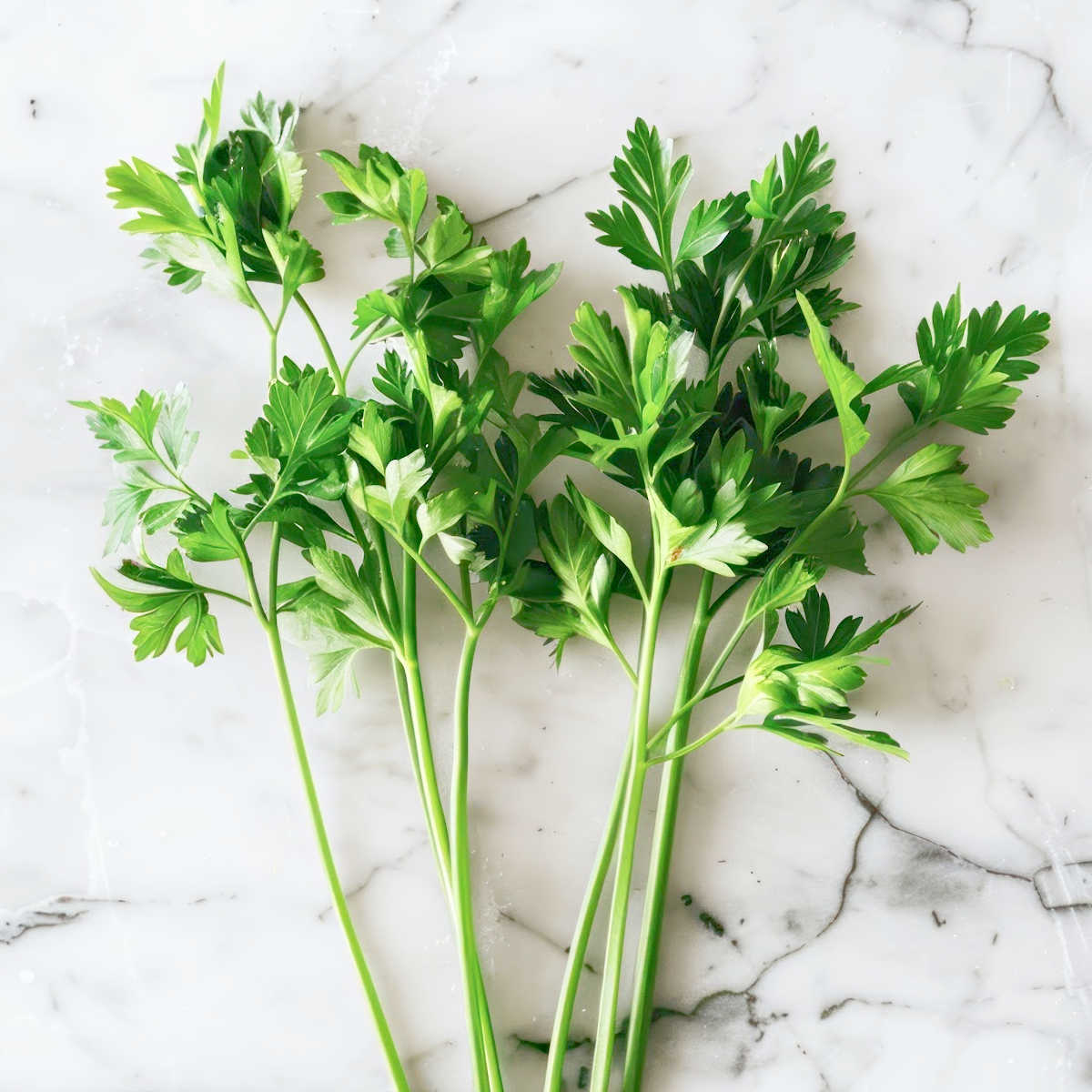
Cooking with parsley has a whole host of health benefits as parsley is rich in vitamins and antioxidants so it's a great herb to add fresh to everyday meals and to immune boosting green soup.
Parsley can also be used in simple natural remedies to relieve :
And parsley has been used traditionally to relieve bad breath and clear skin.
Best Types Of Parsley To Grow
There are two main types of parsley, flat leaf and curly leaf. Flat leaf is generally more flavoursome and more useful as a companion plant and in natural remedies.
When To Plant Parsley
You can plant parsley from early spring through till early summer but parsley seeds prefer warmer temperatures - closer to 20c / 68 f for germination - and can take 6 weeks to germinate if it's not warm enough.
So to grow parsley quickly from seeds it is better to start the seeds indoors if you have cooler springs or to start parsley plants quickly from cuttings.
Growing Parsley From Cuttings
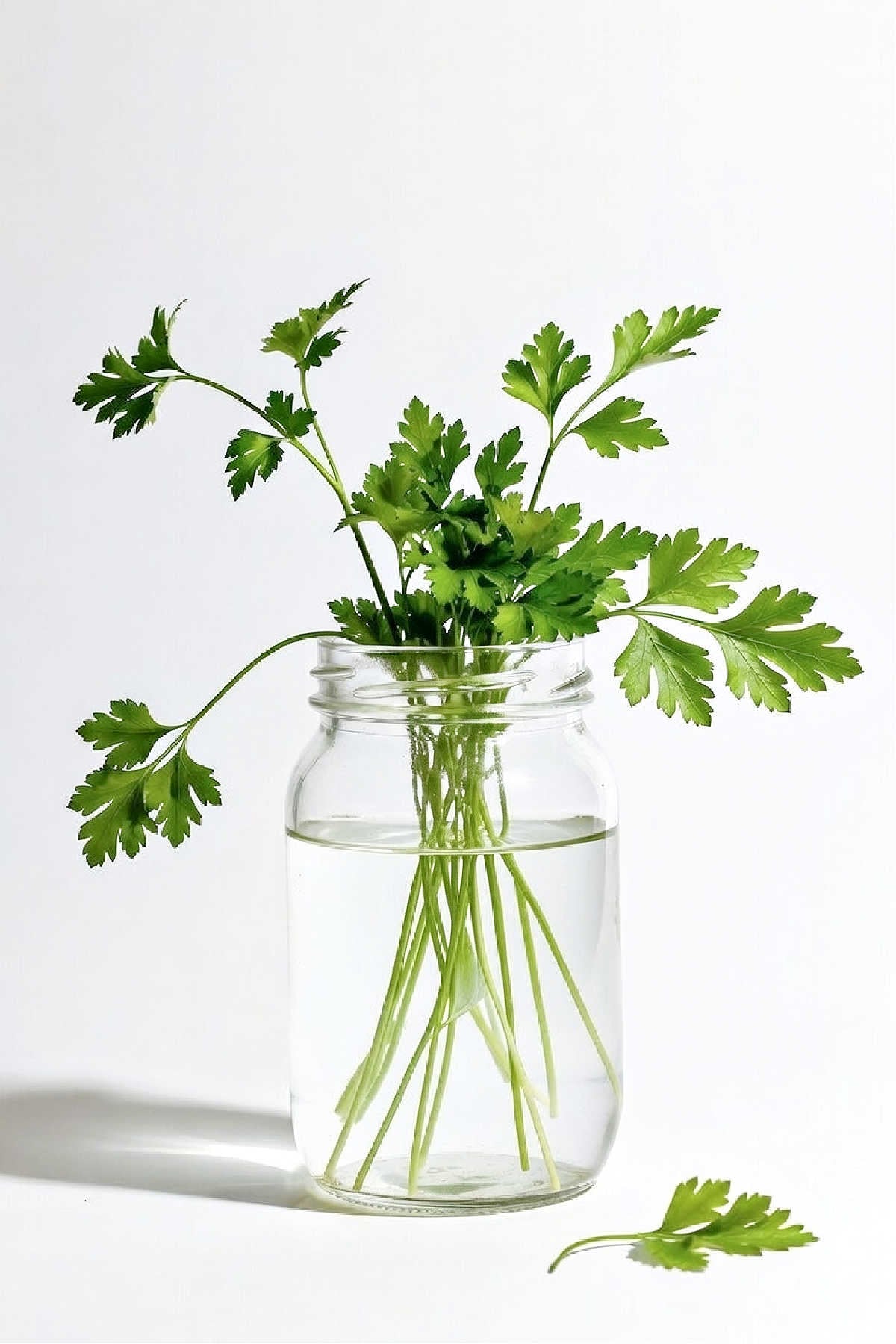
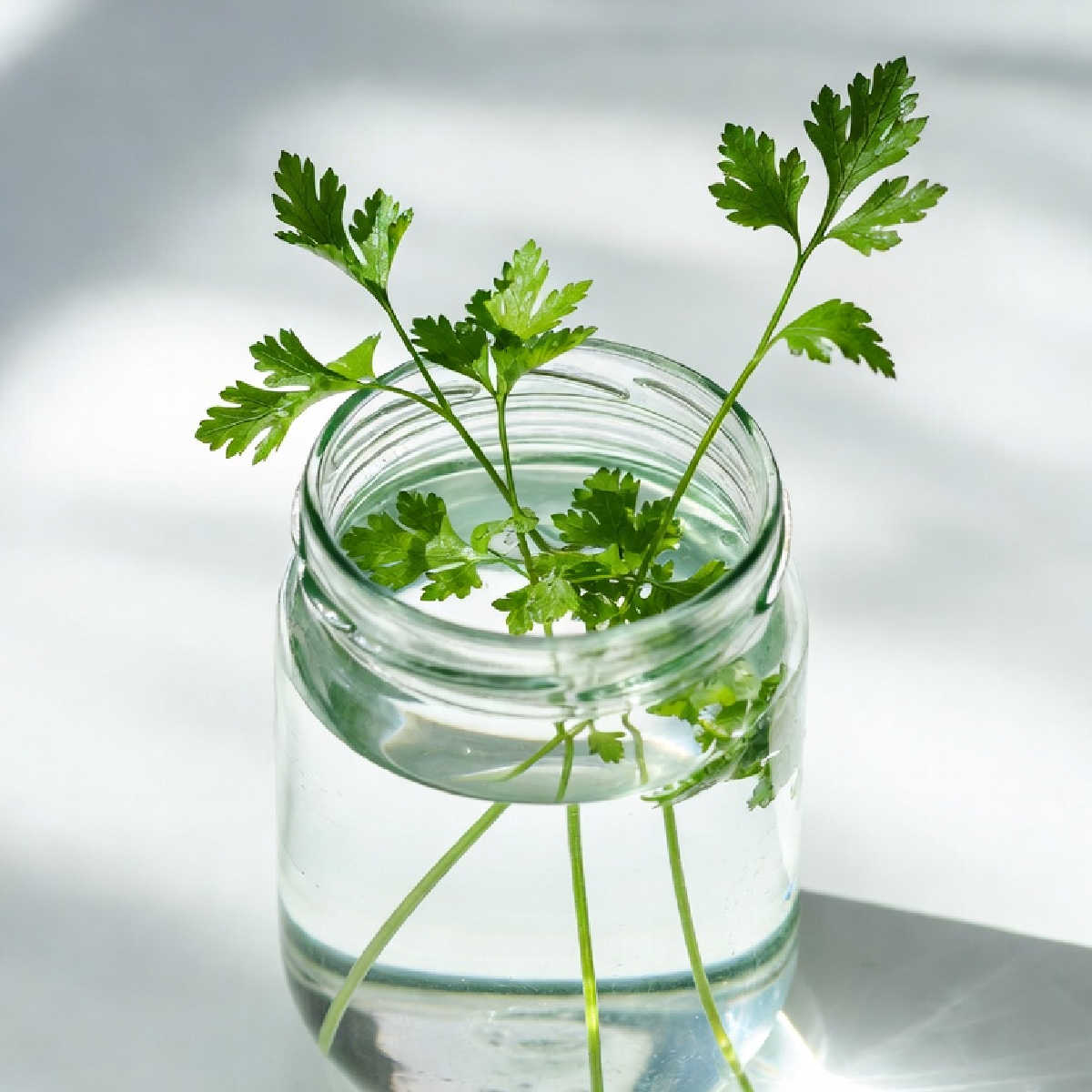
Parsley is one of the wonderful herbs like mint and oregano you can grow super quickly from cuttings. And it is incredibly easy to do :
- Simply take market bought parsley or find a friendly neighbour who grows parsley
- Take 4 or 5 single stems.
- Remove any lower leaves so they don't end up in the water.
- Pop parsley stems in a jar of water.
- New roots will appear from the stem over 1 to 2 weeks.
Once you have an inch or so of root, transplant the stems into into a single pot for growing on or individual pots before transplanting into a herb garden or vegetable or flower beds.
Remember to acclimatise the parsley plants - putting out during the day, bringing in at night - before transplanting outside.
Growing Parsley From Seed

If you can't find parsley cuttings or want to grow a particular variety of parsley it it still possible grow parsley quickly from seed.
The slow bit of parsley growing is typically germination - as we've seen it can take 6 weeks - but once germinated it grows quickly, so the key is to speed up germination :
- Soak the seeds for a day or so in warm water before sowing.
- Sow 1 cm / half an inch deep in nice warm soil.
- You can warm the soil before sowing simply by covering your pots with some clear plastic and putting near a sunny window.
- Keep the soil covered until the seedling appears.
- Just don't let the soil dry out.
How To Grow Parsley Indoors
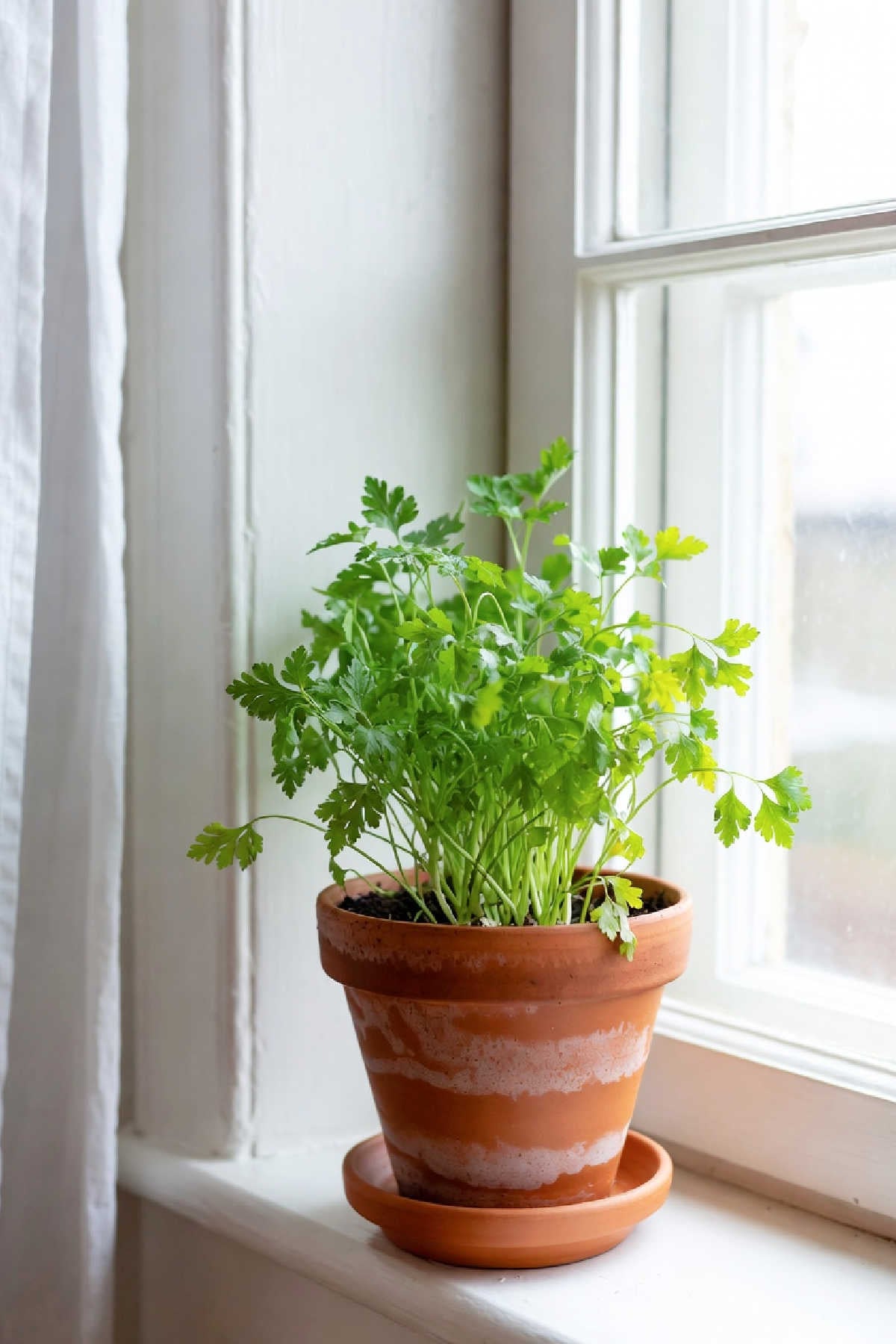
Parsley does like sunshine so if you do have a garden or balcony or sunny window sill it's best grown outdoors once it warms up in spring but you can still grow parsley indoors :
- Keep parsley on a warm window sill that gets sun for most of the day.
- Rotate the plant regularly so all sides of it get sunshine.
- Keep well watered.
- Harvest regularly - see harvesting tips below - to stimulate fresh growth as typically parsley grown indoors will not be as tall and strong as that grown outdoors.
How To Grow Parsley Outdoors

Parsley can be grown outdoors from March, although remember seeds will not germinate as quickly whilst the temperature is cooler. So if you do want to grow parsley quickly, start it off indoors, using the tips above on how to grow parsley quickly from seeds.
- If you do plant parsley outdoors
- Sow seeds 1 cm / half an inch deep
- In standard growing compost
- 2 or 3 inches apart
- Thin seedlings later as needed.
Do mark where you've planted the parsley seeds outdoors because they will take time germinate.
Where Does Parsley Grow Best
In anywhere but the hottest climates parsley grows best in a sunny spot. If the temperature is consistently above 32 c / 90 f however parsley will do better in a pot or container with morning sun and afternoon shade.
Does Parsley Need Sun?
Parsley really does love the sun, so unless it will get very hot in your garden - as described above - try and make sure it gets a good 8 hours of sunshine daily.
How Much To Water Parsley?
Keep parsley well watered and don't let it dry out in hot weather but don't over water to the extent the parsley is sitting in soggy soil
Does Parsley Need Feeding?
Some gardeners will encourage you to feed parsley but planted in good, fertile soil with plenty of sunshine, parsley should not need feeding. If we want to garden more organically we need to cut down on unnecessary soil feeding as much as possible.
Growing parsley in vegetable beds with soil feeding vegetables such as peas and turnips can help ensure your parsley gets all the nutrients it needs to grow quickly.
How Quickly Does Parsley Grow?
You may see gardening tips telling you parsley will take 12 to 16 weeks to grow but you can actually get that down to 6 to 10 weeks if you grow from cuttings or use the tips above on how to grow parsley quickly from seed as much of the lag is the time taken to germinate if you try and start it off outside when it is still too cool.
How To Harvest Parsley
Harvest parsley as you need it. As with other soft stem herbs - e.g. mint & oregano - cut stems low down near the soil to stimulate more stems. Cut any yellowing stems from the soil to promote new healthy growth.
Parsley is a biennial so your plants will only last 2 years going to flower and seed at the end of summer in the second year. You can collect the seeds for planting the following year.
Growing Parsley Organically

Parsley can be very helpful if you want to start gardening organically as planted amongst your vegetables and fruit it:
- Attracts key predators who will eat caterpillars and other pests.
- Repels with its fragrance specific pests, such as beetles.
By planting parsley as a companion plant for natural pest control you can easily reduce the need for toxic pesticides.
Common Parsley Pests
Parsley is a pretty robust plant generally but it can suffer from the following pests:
- Carrot Fly
- Celery Leaf Miner
Carrot Fly
As a member of the carrot family, parsley can suffer from carrot fly just like carrots. Camouflage your parsley from the carrot fly by planting with chives and garlic.
Celery Leaf Miner
Leaf miners can be a problem in a range of plants from celery to spinach and also impact parsley. Watch out for tell tale leaf miner trails through leaves and browning leaves and remove damaged leaves on sight.
Parsley As A Companion Plant
Companion planting is all about planting together vegetables, herbs, fruit and flowers that can feed and protect each other and is key to gardening organically
At its best companion planting is very simple. And the simple thing to know about parsley as a companion plant is that it attracts little predators who help you control pests naturally.
But there is some contradictory advice out there about parsley as a companion plant so you may need to to make some trade offs.
- Apples
- Asparagus
- Beans
- Brassicas
- Chives & Garlic
- Corn
- Peas
- Roses
- Tomatoes
Apples
Growing parsley under apple trees as part of an apple guild can attract the little - non stinging - wasps who will keep coddling moth caterpillars under control.
Asparagus
Parsley grown around asparagus beds or inter-planted with asparagus can help to repel the asparagus beetle.
Beans
Parsley around and underneath bean plants can attracts a range of predators who will control cut worms who can damage beans.
Brassicas
Parsley attracts predators of both the large and small cabbage white caterpillar so can help to protect a wide range of cabbages including tender collard greens.
Chives & Garlic
Interplanting parsley with chives and garlic can help to protect parsley from the carrot fly but keep the distribution well balanced as overdoing the chives and garlic can stunt parsley growth.
Corn
Parsley is a useful companion plant around corn as it attracts small wasps who eat the earworm that devour corn.
Peas
Parsley again predators who can control pea moth caterpillars on your peas.
Roses
Parsley can make surprisingly useful and lovely addition as a companion plant in a rose garden as can help repel aphids from roses and it is claimed actually enhance the fragrance of roses.
Tomatoes
There's a bit of a dispute amongst gardeners as to whether parsley is a good companion plant for tomatoes as some say it improves tomato plant health whilst others say it can stunt tomato plant growth. From what I have seen parsley is beneficial as long as you don't overcrowd beds or pots whilst the tomato plants are still young and getting established.
What Not To Grow With Parsley
With a few exceptions Parsley is a good general companion plant in the vegetable garden but surprisingly less so in the herb garden as it conflicts with a wide range of herbs. Be careful about growing parsley next to any of the following plants :
- Carrots : both attract carrot fly
- Lettuce : triggers bolting
- Mint : suffocates parsley
- Sage : suffocates parsley
- Rosemary : prefers poor dry soil
- Oregano : prefers poor dry soil
- Thyme : prefers poor dry soil
And there you go, everything you need to know about how to grow parsley quickly from cuttings and seeds. It really is easy to grow for new gardeners starting a herb garden so do give it a go.
For more simple gardening guides check out my grow your own posts and follow me on Pinterest.
Leave a Reply