




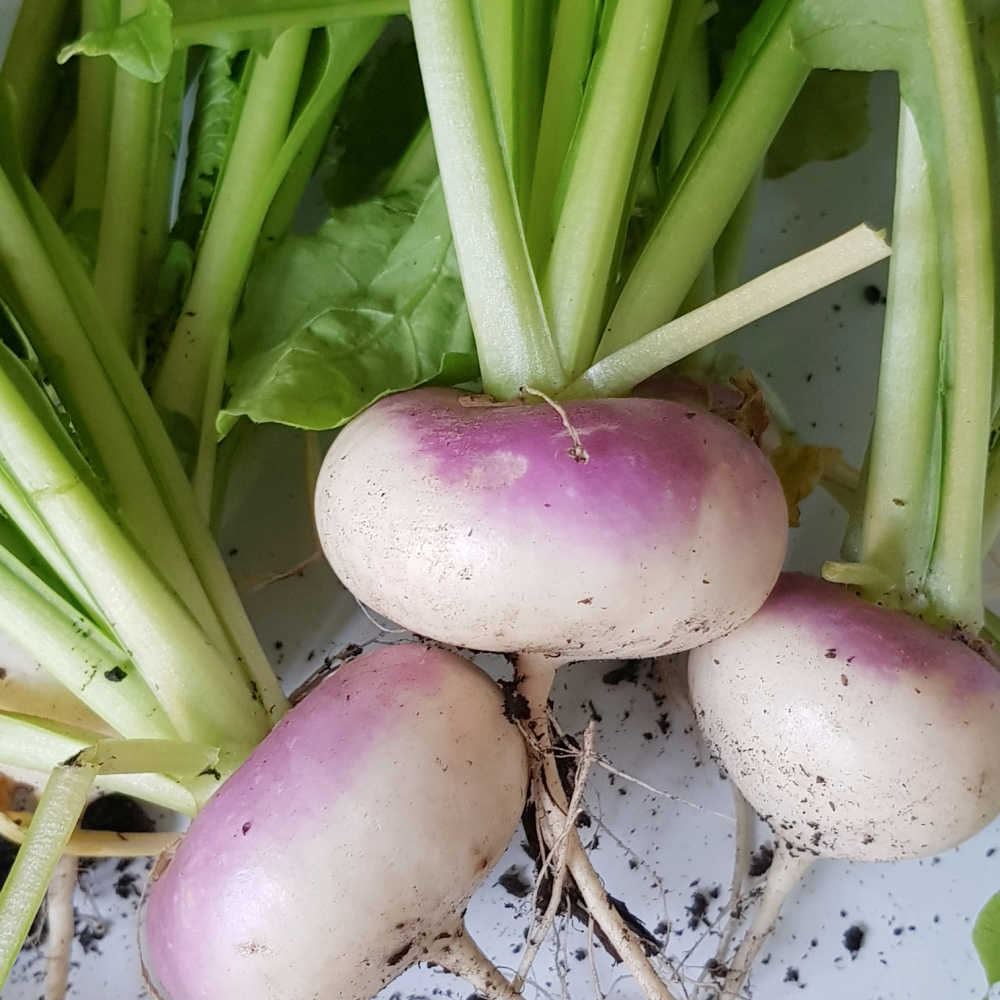
Growing turnips and turnip greens is a must for new vegetable gardeners. And in this post I'll be sharing, why you should grow them - think delicious, soil healing, super foods - and everything you need to know about growing both turnips and their oft forgotten greens.
Table of Contents
Why Grow Turnips?
Health Benefits
Turnips are low starch & low GI so a great swap for potatoes in low carb side dish recipes. Together with their greens they contain :
- Wide ranging vitamins :
- Beta-carotene
- C
- E
- K (loads of it!!)
- Most B vitamins
- Wide ranging minerals :
- Potassium
- Magnesium
- Phosphorous
- Manganese
- Calcium
- Copper
- Anti-oxidants :
- Glucosinolates
- Lutein
- Zeaxanthin
Recent research suggests turnips and turnip greens may also be anti-inflammatory and anti-bacterial and may help with management of diabetes, cholesterol and blood pressure. Wow!!
Garden Benefits
Turnips also have a whole load of benefits for other plants in our garden.
They were traditionally grown as a winter cover crop to :
- Improve top soil structure (tilth)
- Aerate deep soil with long tap roots
- Create biopores for oxygen flow
- Cycle nutrients e.g. nitrogen, potassium from deep to top soil
- Provide green manure for spring
- Release glucosinolates to help control pests and fungi
- Prevent rain and win erosion.
Turnips can also be helpful companion plants for other spring vegetables :
How To Grow Turnip & Turnip Greens
When To Plant Turnips
- Turnips aren't keen on heat so the best time to plant turnips is a fortnight to a month before last frost (UK dates, USA dates) for a spring to early summer harvest.
- However they are happy up to around 24c so in the UK you can keep them going in a cooler part of the garden most summers which is good news as young leaves and roots are great in salads.
- If you want to get them in early look out for frost resistant varieties like the classic Milan purple top & be ready to pop quick DIY cloches on them if the frost comes back.
- Turnips are a quick growing vegetable so if you harvest them young as turnip greens - or as the Italians call them cime di rapa - you can have a crop in a month.
Winter Turnips
- You can plant turnips from late August for autumn & early winter crops.
- Turnip seeds will germinate when it's as cold as 5c / 40f so if like me you're growing in a fairly mild climate - I'm in London - you can keep planting into a mild October especially on sunny beds or in pots that have had summer crops such as tomatoes.
- Give turnips planted in autumn a bit more space so less vulnerable to mildew and fungus.
- For a winter cover crop to be dug through in spring as green manure, plant in September to establish well before it is too cold. Dig cover crops in before they flower and go to seed.
How To Plant Turnips
- Plant turnip seeds about 1 cm deep directly in the bed or pot you're going to grow them in as they're not keen on being transplanted.
- When growing turnip primarily for greens, you can plant seeds as closely as 8 cm / 3 inches apart which is useful if you're growing in pots.
- For more small tender turnips don't plant more than 15 cm / 6 inches apart.
- For large storage turnips plant 22 cm / 9 inches
- For a constant crop of tender leaves and young roots plant seeds little and often, e.g. 10 seeds a week,
- Water immediately but lightly on planting as turnips need moist soil to germinate.
- Turnip seeds typically germinate in just a few days
Growing Turnips In Pots
- Turnip greens - cime di rapa - do well in pots and containers so you can easily include them in a tiny patio or balcony garden.
- If you want to grow turnip greens as alternative to vegetables like kale or cavolo nero plant turnip seeds 1cm deep, 3 inches apart.
- Alternatively for very young salad like leaves sprinkle 15 or so seeds evenly across a 30cm pot or container and cover with a cm or so of soil.
- Keep an eye on the moistness of soil in your turnip pots and don't let them dry out but as the same time don't over water.
- By growing turnips in pots and containers or grow bags - I've grown them in an old potato bag - you can keep your turnip harvest going much longer moving pots from a sunny spot in very early spring to cooler spots as it warms up in the summer.
How Often To Water Turnips
- As mentioned turnips are a quick growing vegetable and the quicker they grow the more tender their leaves will be so we need to keep them moist but they don't want to be sitting in soggy soil.
- If turnips dry out the plants will very quickly bolt and go to flower.
- Water soil around roots lightly and avoid getting leaves wet to help prevent white rust on leaves.
When To Harvest Turnips
- Turnip greens can be harvested Italian cime di rapa style from as little as 15cm or 6 inches high. The leaves will be tender, not quite so tangy and suitable for salads or cooking gently with garlic for cime di rapa pasta.
- If you harvest the turnip greens by cutting the stalks about an inch above the root you will have a fresh crop of turnip greens in less than 3 weeks.
- To harvest the tiny turnips themselves lift every other plant so you can enjoy the roots roasted whilst still keeping a continuous cut-and-come- again turnip greens crop growing.
- Eat tiny turnip roots with 15cm or so leaves raw in salads as radishes and roast slightly bigger roots in oil. You don't need to peel them.
- Harvest all turnip greens before they are 30 cm / 12 inches or so high as the leaves will get tangier as they get bitter.
- If the weather turns very warm in spring or early summer, it's usually better to harvest your turnip greens on the young side as their pleasant tang can border on bitter if they get too much sun.
- But if the turnip green leaves do get a bit big cooking them gently in lots of butter and garlic will still make them delicious
How To Stop Turnips Bolting
- Turnips do have a reputation as bolters.
- Which is cool as a plant life cycle activity for kids as it lets them see a very quick seed to seed cycle but bolting turnips aren't great when we want lush young turnip greens!!
- The best way to stop turnips bolting are to:
- plant turnip seeds as early as frosts allow
- plant turnips in pots and containers so they can be moved from over sunny spots in unusually hot springs
- don't let turnips dry out
- mulch soil around turnips to keep cool and damp
- harvest turnip greens early.
Best Ways To Store Turnips
- To be very honest the best ways to store turnips are not to!!
- If you grow turnips for cime di rapa and delicious small roots the best thing to do is harvest them as needed and eat fresh.
- But if the weather is getting hot and you don't want them bolting or your turnip tops are in danger of getting too big, then turnip greens will keep happily for 7 days in fridge or you can easily freeze turnip greens in the same way as you freeze kale for example for easy cooking later.
- Small turnip green roots will keep in the fridge for a good while but the sooner we eat them the more delicious they are to be honest.
Turnips As Companion Plants
- Turnips are great companion plants for all sorts of fruit and vegetables from raspberries to peas because as mentioned they feed and heal the soil and appear to have antibacterial and anti-fungal properties that can help plants prone to fungal diseases.
- Turnips are good companion plants for cabbage and spinach - another great quick growing vegetable for beginners starting a vegetable garden on a budget - as they can help to repel aphids.
- Some gardeners also suggest that turnips are happier as companion plants with green leafy plants rather than other root vegetables as they compete less for soil nutrients.
Common Turnip Pests
Turnips do like all vegetables suffer from some pests - so it's worth knowing and recognising these before planting - but in general turnips suffer less from garden plants than most vegetables. Ones to watch out for are:
- Leaf Hoppers
- Turnip Moth & Cutworms
- Turnip Root Fly
- Flea Beetle
- Cabbage Loopers
Leaf Hoppers
yellowing or wilting leaves can be a sign of leaf hoppers. Keep an eye on the underside of leaves and remove eggs and larvae to control leafhoppers organically.
Turnip Moth & Cutworms
The turnip moth lays its caterpillar - known as cutworms - underground and they eat the root and "cut off" new seedlings and plants just above the root. Pick them off manually in evening into a bucket of soapy water or try deterring with diomastaceous earth, egg shells or coffee grounds. There are more tips here on how to control cutworms organically.
Turnip Root Fly & Cabbage Root Fly
The eggs of these flies are laid in the soil around the turnips and the larvae then tunnel through the turnip roots. Keep the flies away by covering beds in fine mesh and protecting soil around base of young plants with cardboard. There are more tips here on how to control cabbage root fly.
Flea Beetle
Make tiny holes in young plants. You can again protect turnips from flea beetles by covering beds in fine mesh and there are more tips here on flea beetle control for organic gardeners.
Cabbage Loopers
Cabbage loopers are the green caterpillars of the brown trichoplusia ni moth. Watch out for and manually remove eggs on the underside of leaves and keep moths off with fine mesh covers.
Common Turnip Diseases
Turnips do suffer from a few diseases but again they are a pretty resilient plant and may actually protect other vegetables and fruit from viral and fungal diseases. Diseases turnips are prone to watch out for are:
- White Rust Fungus
- Powdery Mildew
- Club Root
- Turnip Mosaic Virus
White Rust Fungus
Is a white mold that appears in specks on turnip leaves. It doesn't appear to harm the root but as we're growing turnip for turnip greens we want to prevent it. The key tips is to water roots lightly and avoid watering leaves so they don't get too damp but there's a full guide here on how to identify and prevent white rust on turnip.
Powdery Mildew
Turnips like many plants can suffer from white powdery mildew which can be exacerbated by damp leaves and lack of air especially later in the year but if you are growing turnip greens quickly as cime di rapa it is unlikely to be a problem.
Club Root
Wilting leaves that fail to thrive and knobbly, distorted turnip roots are a symptom club root a fungal disease impacting many brassicas. There are tips here on how to prevent club root organically but again it is less likely to be a problem in turnips grown quickly for turnip greens.
Turnip Mosaic Virus
Turnips can suffer from mosaic virus in which their leaves become very mottled. The virus is actually typically spread to turnips by aphids so a mesh cover can provide protection but it is again unlikely to be a problem with turnips grown from seed for turnip greens in less than 6 weeks.
How To Grow Turnip Greens From Scraps
- One of the coolest things about turnips is how well they grow from scraps.
- A small slither off the top of a turnip root will grow luscious leaves when rooted in water and can actually go through the whole life cycle, flower and produce seeds.
- It is a fun plant life cycle activity for kids that really open their eyes about plant structure and propagation.
And there you go. Everything you need to know about growing turnips and turnip greens.
For more simple tips check out my other gardening posts and follow my grow your own board on Pinterest.


Bruno John says
For those looking to sow turnip greens in the fall, here's a top tip: get them in the ground about four weeks before that first frost hits.
Alice says
Top tip Bruno - although frost dates seem harder and harder to predict. We have had very mild autumns recently in London but then got hit by early frosts and a very sudden dump of early snow last year for which I have to confess I was not prepared!!