
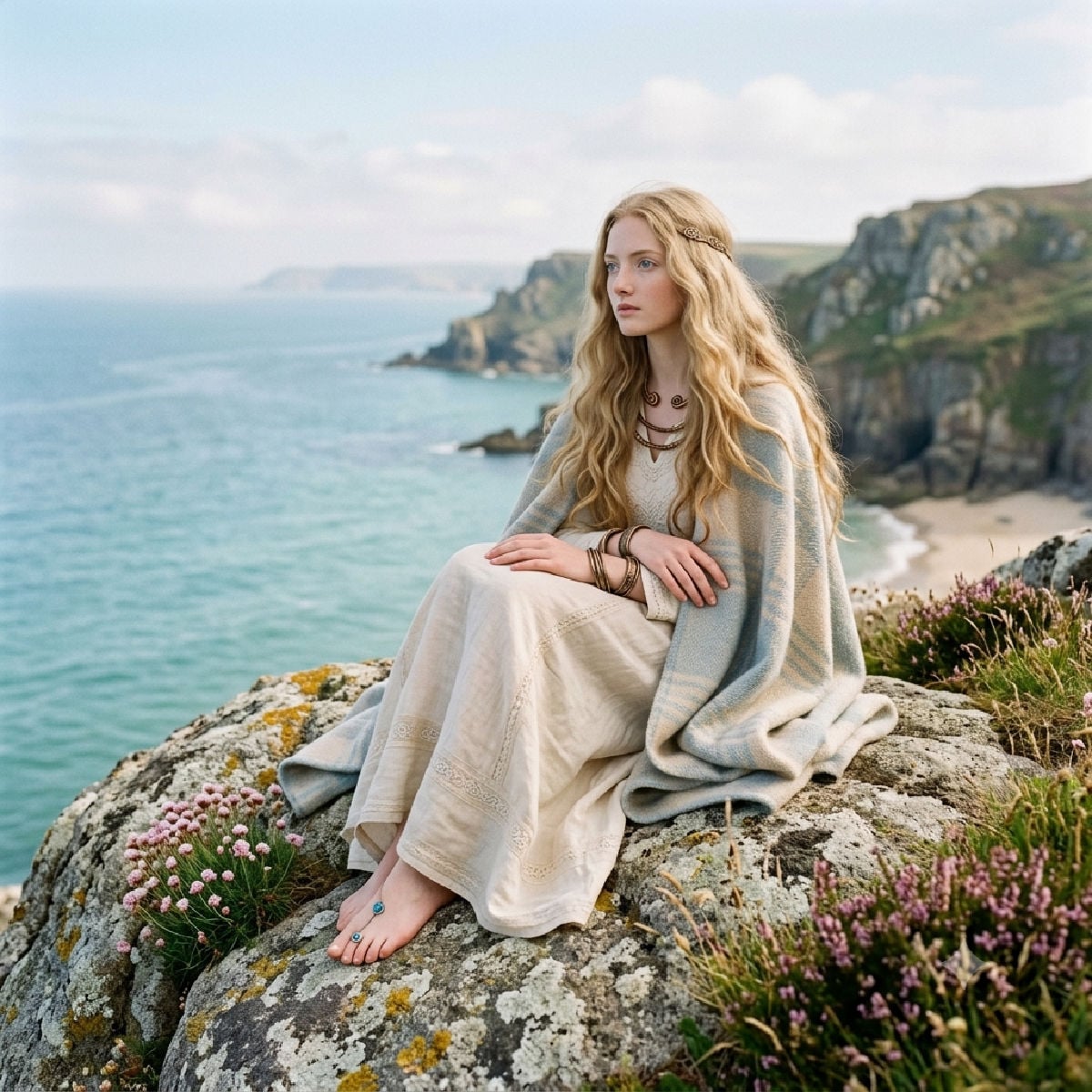
The old tales of Celtic princesses are a wonderful place to find rare names for your baby girl or characters. The stories are full of beautiful brave woman charting their own paths across history.
There are romantic heroines, martial art champions, magical queens with magical horses and tenacious mamas defending their children against all comers, to name but a few.
So if you have Celtic ancestry or feel the draw of lost kingdoms in the mountains and beyond the sea, you will love this guide to Celtic names.
The guide covers rare names from all the Celtic languages including :
- Welsh
- Breton
- Cornish
- Scottish Gaelic
- Manx
- Irish
- And even Cumbric.
It gives you name meanings and pronunciations but also inspiring stories of the women who bore them.
I'll start with a quick intro to the lost kingdoms of the Celts but you can use the index to jump straight to the names.
Table of Contents
The Lost Celtic Kingdoms
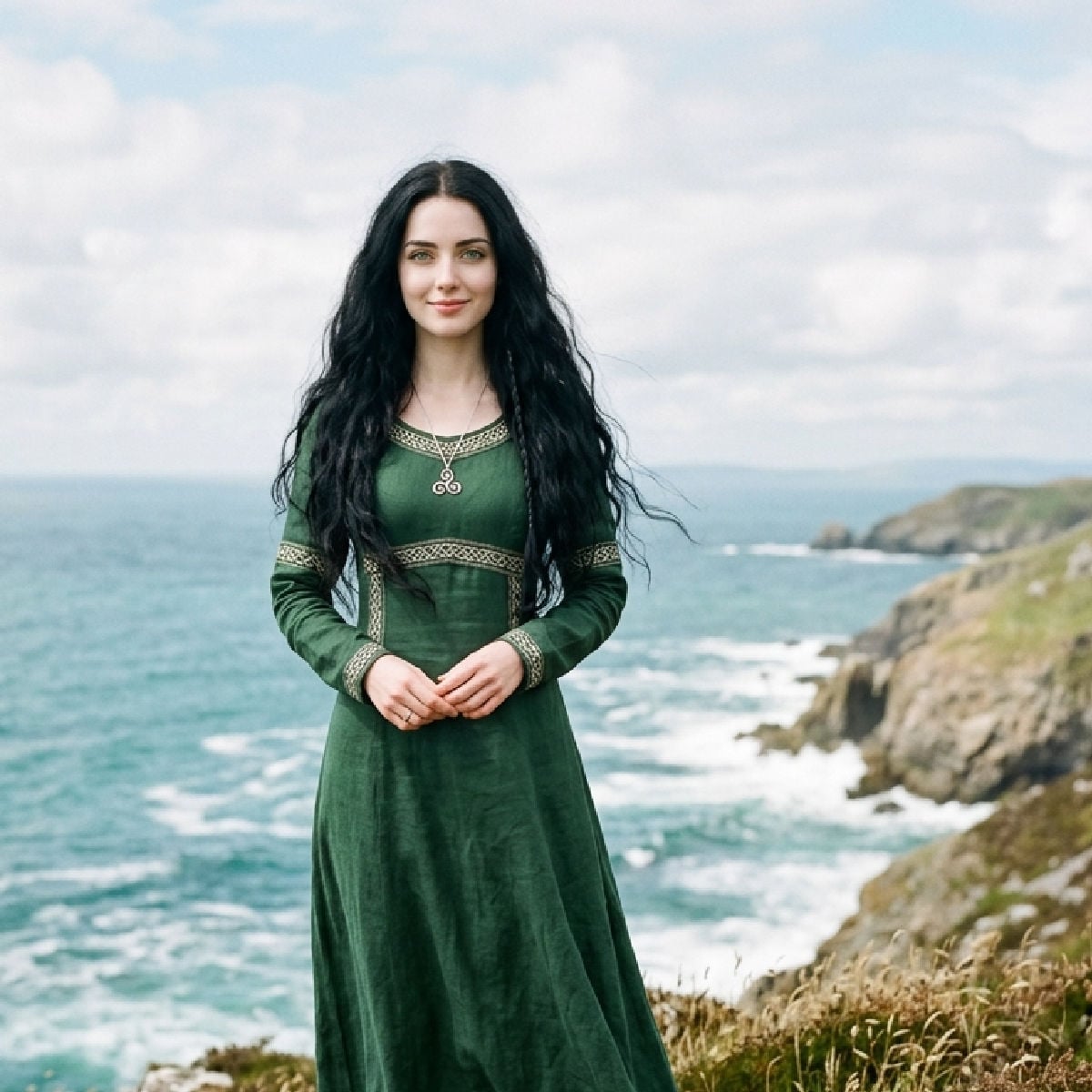
There is a debate about who the Celts were but we know they lived in Britain, Ireland and Brittany (plus Galicia in Spain) for 1,000 years before the Romans rocked up in 55BC.
The Romans pushed the Celts westward into mountain hide outs and in the 500s, the Anglo Saxons pushed many even further west into Celtic strongholds in Ireland and Brittany.
The great Celtic stories and songs emerge as mourning for these lost Kingdoms. But the myths go even further back into the glories of the Bronze Age in Ireland and Wales and forgotten realms lost deep not just in history but under the Celtic seas!
Cornish
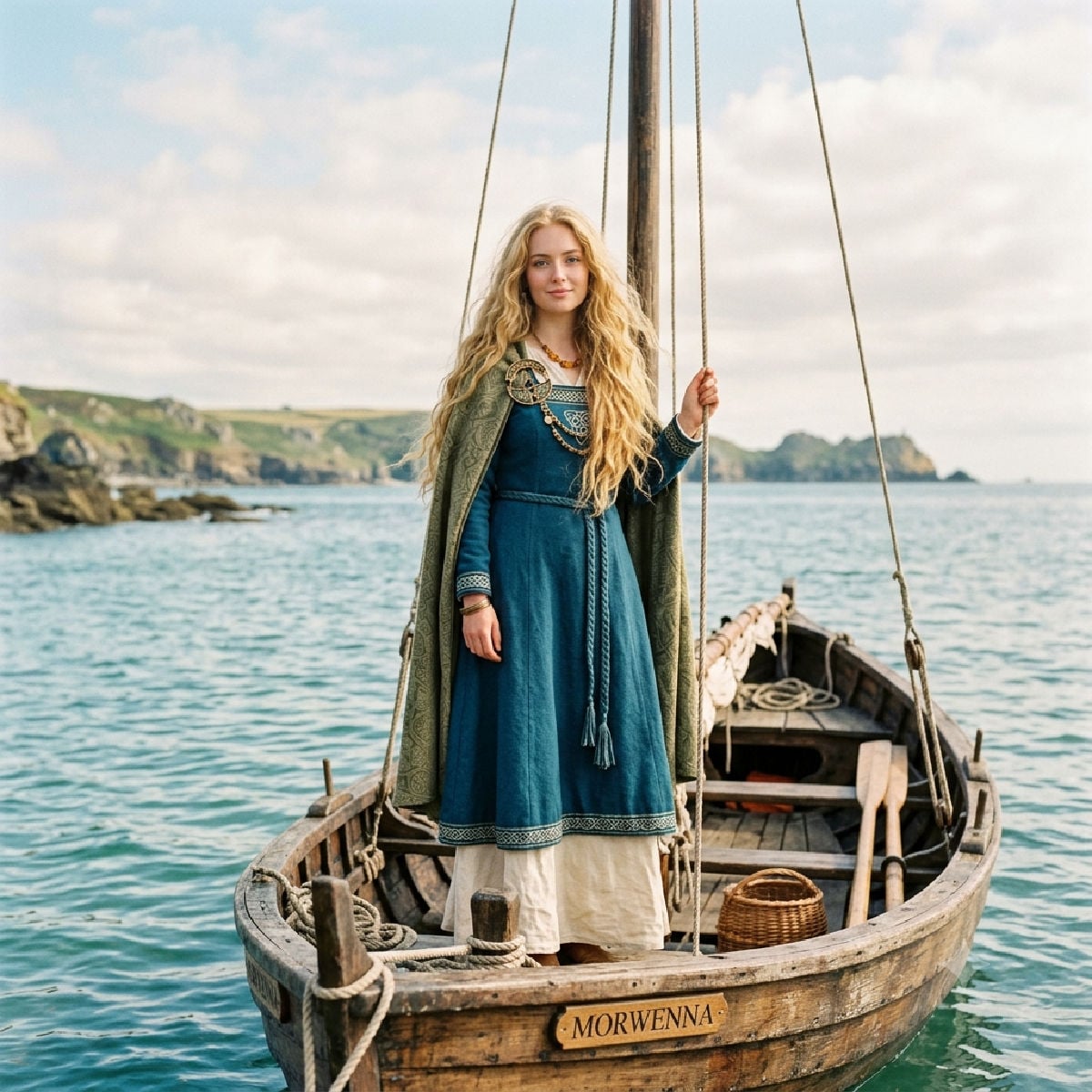
Cornwall suffered greatly under the Anglo-Saxons and few Cornish (Kernewek) records survive until the golden age of Cornish literature in the 1300s. But in the scarce records, dramatic plays and Cornwall's place name we can trace fabulous folklore stories of her princesses :
- Asenor
- Breage
- Elowen
- Endelyn
- Eia
- Eseld
- Keina
- Morwenna
- Senara
Most people in Cornwall spoke Kernewek (Cornish) until the 1600s but sadly, only 500 people now use it as their first language.
Asenor
Meaning : shining one, bright lightness
Pronunciation : ah-ZEH-nor
A beautiful young woman is drawn to the church at Zennor by the fine singing of a young local man. He is equally drawn to her beauty but she is Asenor a Princess from under the sea who eventually tempts him to her home never to be seen again.
Brega
Meaning : special radiance
Pronunciation : BRAY-ga
A brave Irish noble woman who defied the pagan Cornish king Tewdwr Mawr to build a hill top church and monastery in Cornwall in the 400s. A church remains on the site to this day and is one of the most beautiful in western England.
Variants : Breaca, Bregha
Eia
Meaning : Swift waters
Pronunciation : EE-ah
An Irish princess who by tradition sailed miraculously to Cornwall in the 500s on a giant leaf when she missed her boat from Ireland! St Ive's is named after her.
Variants : Ive, Ia
Elowen
Meaning : Of the elm woods
Pronunciation : eh-LOW-en
A cruel witch transformed Princess Elowen into a bramble bush to keep her from her beloved Prince Pascow. But Peller, a good witch, showed Pascow how to brew blackberries from the bramble into a magical syrup that released Elowen from her trap.
Variants : Elowyn, Elowena, Elowenna
Endelyn
Meaning : Bright fountain
Pronunciation : EN-del-in
Princess Endelyn, one of the many daughters of King Brychan, used her deep faith to stop a spiral of violence started by squabbles over cattle, bringing back to life all those who had been killed including the cows. The village and church of Endellion are named after her.
Variants : Endelienta, Endellion, Elia
Eseld
Meaning : she who is gazed upon
Pronunciation : eh-ZELD
Eseld, an Irish princess was escorted by Drustanus, a brave Cornish knight, across the Celtic sea to marry his uncle King Mark but mid journey they fall in love and into one of the greatest tragic romances of all time, now known as Tristan and Isolde.
Variants : Ysella, Adsiltia
Keina
Meaning : fair & blessed
Pronunciation : KAYN-na
Keina, a sister of Endelyn, was given land full of poisonous snakes, which through prayer she turned into coiled stones. The village, church and holy well of St Keyne are named after her.
Variants : Keyna, Kayna
Morwenna
Meaning : white sea, fair wave, maiden of the sea
Pronunciation : mor-WEN-ah
In the 400s Morwenna carried granite boulders up a Cornish cliff to build a chapel looking over the sea. When she sat down midway to rest, a spring of clear fresh water burst forth at what is now St Morwenna's well. St Morwenna's church and the village of Morwenstow are still there above the waves.
Variants : Morwen, Wenna
Senera
Meaning :
Pronunciation : seh-NAR-a
Senera was another princess who built a chapel from the rocks of the Cornish coast. Blocked in her work by a giant who threw boulders at her, she transfixed him with religious songs so beautiful they split the rocks the giant left her in peace to finish her work. Her church now over 1400 years old is still the parish church of Zennor.
Variants : Zénara, Sanara
Welsh
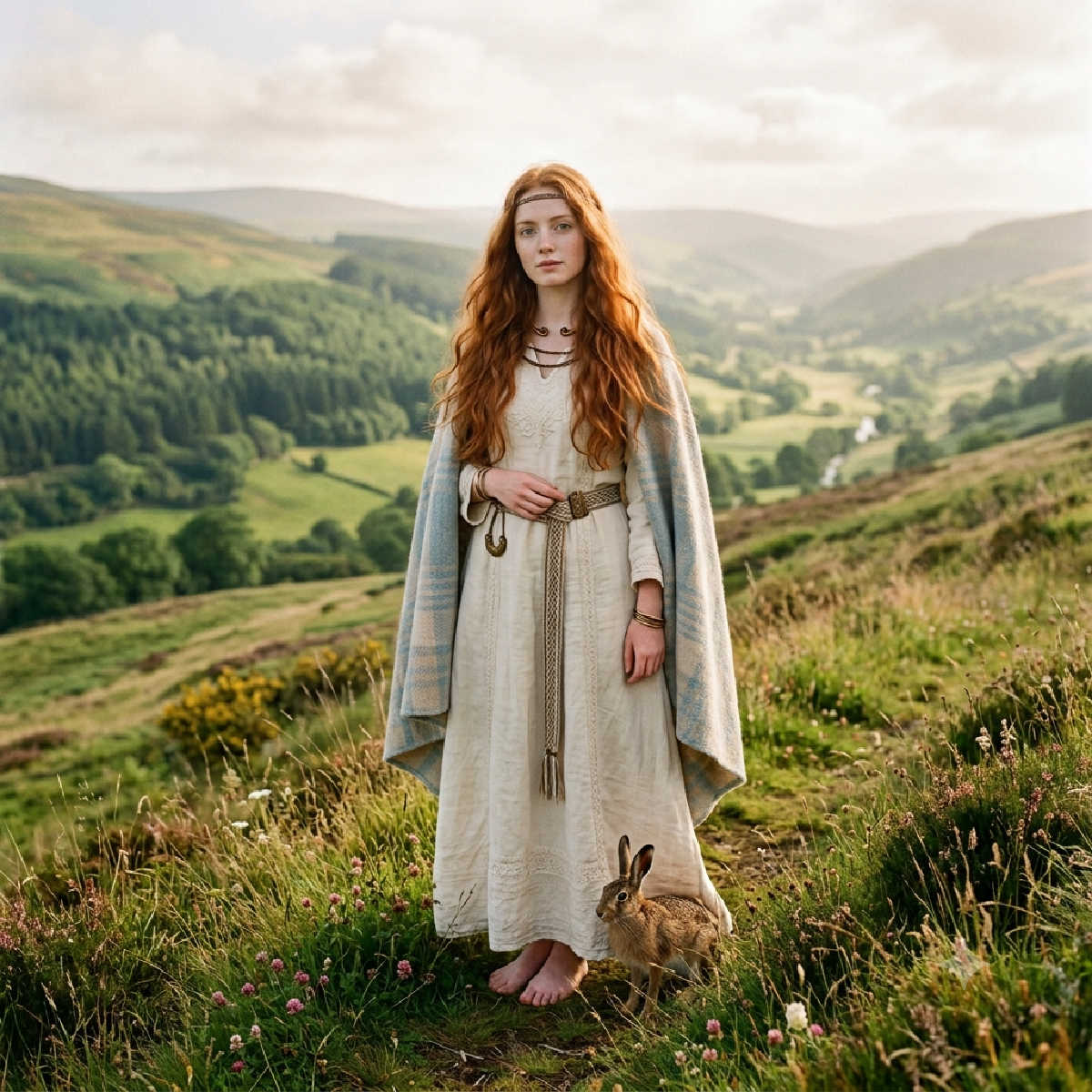
The princess names of old Wales are found in the strange stories of the Mabinogion. Written in the 1200s they interweave tales of early Christianity and battles against Anglo-Saxons with deep myths reaching back into the Iron Age before the Romans came :
- Arddun
- Branwen
- Ceinwen
- Efa
- Eleri
- Esyllt
- Eurddyl
- Gwendolen
- Gwenllian
- Rhiannon
One warning, some Welsh princess stories are great tragedies so brilliant for characters but maybe not always best for a beautiful baby name!
Arddyn
Meaning : beautiful, magnificent, dignified, sublime
Pronunciation : AR-thin
Arddyn was the daughter of the last king of Hen Ogledd - the Old North of northern England and southern Scotland - who had to flee from the invading Anglo-Saxons to Wales where she became Queen of Powys.
Variations : Ardi, Ardie
Branwen
Meaning : white raven, blessed raven
Pronunciation : BRAN-wen
Branwen is a tragic Mabinogion heroine. Sister to Bran the giant King of Britain, she marries the King of Ireland. After much abuse she trains a starling to tell her brother of her plight. Bran wades across the sea with his army to rescue Branwen but in a terrible war almost all the Irish and British are killed and Branwen dies of grief.
Variations : Bree
Ceinwen
Meaning : fair and blessed, pure beauty
Pronunciation : KAYN-wen
Princess Ceinwen escaped to the island of Anglesey pursued by a prince she did not want to marry. With nowhere further to run she prayed for protection and the rocky land split and shifted to hide her safely from the prince.
Variations : Ceinnie (KAYN-ee)
Efa
Meaning : life giving, mother of life
Pronunciation : EH-vah
Efa was a princess of the golden age of Welsh independence in the 1100s and a time when Welsh women had more freedom and rights than their sisters over the border in Norman England. You can still visit the ruins of the abbey Efa built hidden away in the greenest of green valleys.
Variations : Efên (eh-VEN), Efi (EH-vee)
Eleri
Meaning : swiftly flowing water
Pronunciation : eh-LEHR-ee
Queen Eleri was the wife of Ceredig, the warrior king who gave his name to the kingdom of Ceredigion in west Wales and the grandmother of St David, the patron saint of Wales.
Variations : Meleri, Teleri
Esylt
Meaning : beautiful object to behold
Pronunciation : EH-silt
Wales like Cornwall has a Tristan and Isolde story in its old myths. But in the Welsh version, the heroine Esylt escapes with her beloved Drystan thanks to her clever wit and some help from King Arthur himself.
Eurddyl
Meaning : golden girl, splendid one
Pronunciation : EIR-thil
When Eurddyl falls pregnant out of wedlock her father the king drowns her in a sack in the river Wye but she floats to shore dry. He then burns her on a funeral pyre but she is unharmed. The king repents and Eurddyl's baby grows up to be Saint Dyfrig a founding father of Christianity in Wales.
Variations : Thilla, Efrddyl (EV-ril)
Gwendolen
Meaning : white ring
Pronunciation : GWEN-dol-en
Queen Gwendolen raised an army against the husband who abandoned her and after defeating him in battle took the crown and ruled Britain herself, wisely and well, for 15 years.
Variations : Gwendolyn, Gwendoline
Gwenllian
Meaning : blessed stream
Pronunciation: gwen-HLEE-an
Gwenllian was a Welsh warrior princess in the 1100s who raised and led an army into battle against the Norman occupiers and was remembered in songs by the Welsh bards as a great heroine of the nation.
Variations : Gwenli, Llia, Gweneira
Rhiannon
Meaning : great queen, divine queen
Pronunciation : hree-AN-on
Mysterious Rhiannon (100BC) arrived at the court of King Pwyll on a beautiful white horse that outpaced all others. She agreed to marry the king but was falsely accused of killing her own baby. After enduring long cruel punishment with stoic dignity she was finally vindicated by the return of her son.
Variations : Rhian (HREE-an)
Breton
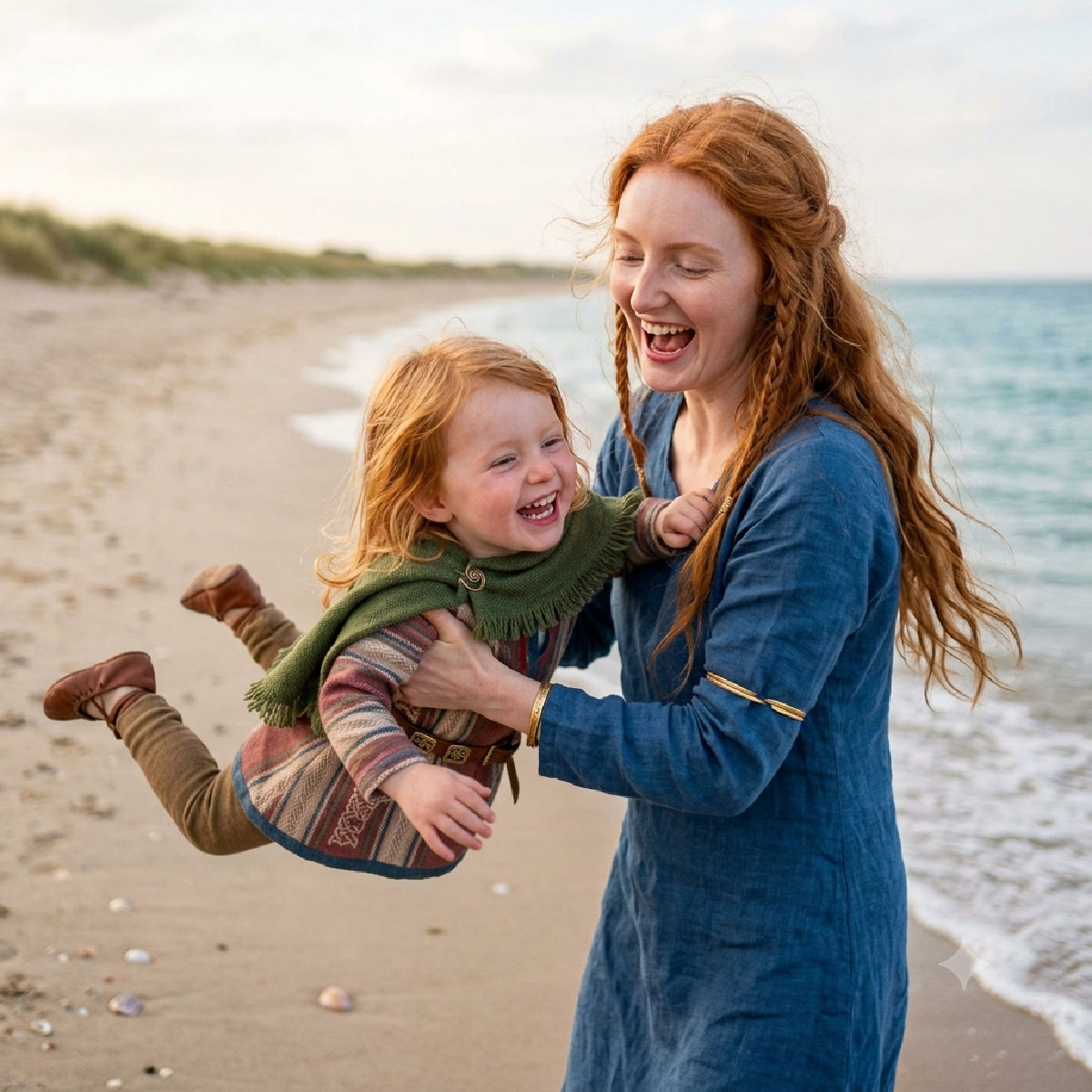
Brittany is now part of France but most people spoke Breton - a Celtic language close to Welsh and Cornish - right into the 20th Century and the princesses of is ancient stories were closely entwined with the other Celtic lands :
- Azénor
- Enora
- Glwadys
- Katell
- Klervi
- Nolwenn
Azénor
Meaning : all honour,
Pronunciation : az-ay-NOR
Pregnant Princess Azénor was falsely accused of adultery, shut into a barrel and thrown into the Atlantic Ocean but after many months washed up on the shore safely with the son she had given birth to whilst afloat.
Variations : Azenor, Asenora, Senara
Enora
Meaning : honoured
Pronunciation : eh-NOR-ah
Princess Enora sailed alone in a tiny leather coracle boat across the storms of the Celtic Sea to Brittany in search of her husband, a cousin of King Arthur.
Variations : Enor, Honora, Hennara
Glwadys
Meaning : princess of the land
Pronunciation : GWLAH-diss
Beautiful Princess Glwadys was protected by King Arthur in a fierce dispute between her father and husband and in turn became herself the protector of holy wells and springs throughout the Celtic world.
Variations : Gwladys, Gladys, Glwadis
Katell
Meaning : pure
Pronunciation : kah-TELL
Katell, a Breton noblewoman, swore only to marry the man who could out-dance her for half a day. Many suitors failed until a handsome stranger matched her step-by-step for the full 12 hours only to reveal himself in the moment of his triumph as the devil himself and to lead Katell to hell.
This is definitely a Breton name for characters not small babies!
Variations : Katel, Katina, Kadiou
Klervi
Meaning : bright clear
Pronunciation : KLAIR-vee
Klervi, a 5th Century Breton princess, was savaged by a wild goose who tore out and swallowed her eye but her sight was saved by her brother Saint Guénolé who chased the goose, cut open its stomach and popped the eye back in.
Variations : Clervie, Chlevi, Klervia
Nolwenn
Meaning : fair blessed one
Pronunciation : nol-WEN
Nolwenn was a brave but tragic Breton saint who was executed after refusing the advances of a pagan tyrant, only to pick up her head and walk to a riverside spot where she was buried and a chapel built in her honour.
Variations : Nolwen, Nolwene
Rivanon
Meaning : great queen
Pronunciation : ree-VAH-non
Rivanon, a Breton noble girl, dreamt she would marry a man she'd never met. Walking by a stream she met and fell in love with a blind but brilliant bard from the court of King Arthur who had had the same dream. They married and were parents to Hervé one of Brittany's best loved saints.
Variations : Rivanone, Riwanon, Riwana
For more inspiration from France check out these beautiful old fashioned French girls names.
Manx
The Celtic kingdom of Mann once included the Hebrides and the Isles of the Clyde as well as the Isle of Man itself. Some of Mann's most famous princesses were part of a great Celtic-Norse dynasty that intertwined the two cultures :
- Affreca
- Breeshey
- Fenella
- Marona
- Maugholda
- Moirrey
- Teeval
Affreca
Meaning : full of joy
Pronunciation : AFF-rek-uh
Princess Affreca, daughter of the King of Mann, was caught in a fierce storm in the Celtic Sea on the way to marry a Norman lord of Ulster. She vowed to God she would build a magnificent abbey wherever her ship landed if she and her shipmates were saved and the ruins of her abbey can be seen on the coast of Strangford Lough today.
Variations : Affraic, Effrica
Breeshey
Meaning : virtuous strength
Pronunciation : BREE-shee
The Manx name for St Brigid of Kildare, who combines elements of early Christianity and Celtic myth. She built a chapel on the Isle of Man in the 500s and was very popular in the Mann kingdom.
Variations : Bride
Fenella
Meaning : white shouldered
Pronunciation : feh-NEL-ah
Fenella, also known as Fingola, was an Irish princess who married King Godred of Mann part of the Crovan dynasty famed for their great fleets of galley ships and naval strength. There are still places named after her on the island today.
Variations : Finola, Fingola, Fionnuala
Marona
Meaning : little seal
Pronunciation : mah-ROH-nah
Marona is a feminine version of Maronog, name of the saint who first brought the Christian faith to Mann but the name also has its roots in the deep Manx mythos of the ronany, enchanted shape-shifting seals who could walk on land as extraordinarily beautiful humans.
Variations : Marown, Maronee
Maugholda
Meaning : wise, holder of hidden knowledge
Pronunciation : MAW-gohld-ah
Maugholda is a feminine version of Maughold the patron saint of Mann. Originally a fierce pirate prince Maughold was converted by St Patrick and sent to pay penance serving the people of Mann.
Moirrey
Meaning : beloved, drop of the sea
Pronunciation : MUR-uh or MUR-ee
Moirrey is the Manx version of Mary. Queen Moirrey de Ergadia was the last valiant queen of the kingdom of Mann before its conquest by King Edward I of England.
Variations : Voirrey, Mariot (MAH-ree-at), Mariod (MAH-ree-ad), Moreen
Teeval
Meaning: ocean princess, sea bright
Pronunciation: TEE-val
Teeval was a beautiful mermaid princess who won her freedom from King Conchubar by giving him a magic shield engraved with her image and name. Whenever, the king raised his shield in Teeval's name in battle all strength would drain from his enemies into his own warriors.
Variations: Tioval, Teeval.
Scottish Gaelic
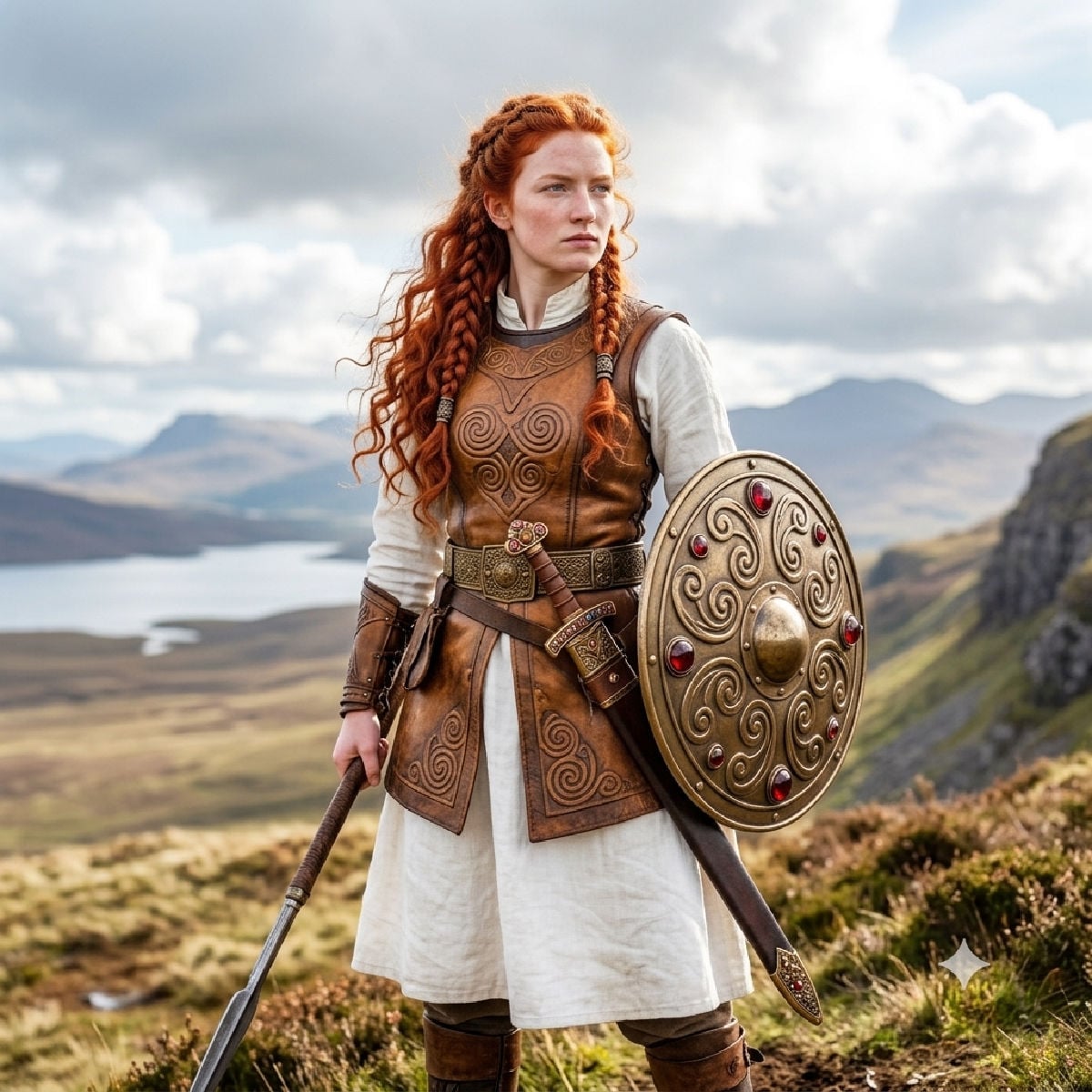
Scottish princesses are nowadays mostly known for brave deeds against the English but many of the great Gaelic heroines of history and myth were of the highlands and Western Isles and in constant battle against the lowlanders of Edinburgh :
- Ealasaid
- Eithne
- Iseabail
- Marsaili
- Mór
- Muireall
- Oighrig
- Raonaid
- Scáthach
- Sorcha
Ealasaid
Meaning : God is my oath
Pronunciation : ELL-uh-set
Queen Ealasaid, wife to Robert the Bruce, was kept prisoner for 8 years by Edward I of England to try and force Robert to surrender to the English. She returned to Scotland triumphant after Robert's victory at Bannockburn.
Variations : Elspeth, Elspat
Eithne
Meaning : inner beauty, essential beauty
Pronunciation : AY-nuh
Mother to St Colomba, Eithne whilst pregnant was visited in a dream by an angel who handed her a cloak woven with every flower and colour in the universe before letting it drift away across mountains and sea. The cloak, the angel said, symbolised all the souls her son would lead across Scotland to paradise.
Variations : Ethne, Etney, Enya
Iseabail
Meaning: pledged to God
Pronunciation: ISH-uh-bel
Iseabail Macduff, Countess of Buchan, stole her husband's warhorse and rode frantically to Scone Palace to fulfil the ancient rights of her family and crown Robert Bruce King Of Scotland after her brother wimped out under threats from Edward of England.
Variations : Ishbel, Isobel
Marsaili
Meaning: pearl (Gaelic for Marjorie)
Pronunciation: MAR-suh-lee
Princess Marsaili was the beloved daughter of King Robert the Bruce. She tragically died in childbirth after being thrown by her horse but her newborn son survived and founded the house of Stewart who became kings not only of Scotland but of all the old Celtic isles in Britain and Ireland.
Variations : Marsali, Maisie, Marcella
Mòr
Meaning : great, grand, majestic
Pronunciation : MAWR
Mòr of Mar was the founding queen of the great clan that became the MacDonalds and the MacDougalls. Famed for her power, her story became intermingled with the old myths of the Morrigan and it was claimed Mòr lived partially outdoors in the great pine forests of the north with her personal flock of wild red deer and that she could control the weather in wartime.
Variations : Mòrag (MAW-rag)
Oighrig
Meaning : beautiful face
Pronunciation : OY-rik
Countess Oighrig of Ross, inherited the great Easter and Wester Ross of the Highlands from her father in the 1300s but had to spend her whole life defending it from the machinations of the Stewarts including her brutal husband Alexander, "Wolf of Badenoch".
Variations : Aithbhreac (AY-vrok)
Raonaid
Meaning : innocent, gentle
Pronunciation : ROON-etch
Princess Raonaid was heiress to the isles of the Outer Hebrides that controlled the navigation of the Celtic seas. She married the Lord of the Inner Hebrides but when he divorced her and claimed her lands she fought back building the great castle of Bhuirgh to defend the independence of her islands.
Variations : Raonaild, Raghnailt
Scáthach
Meaning : she who strikes fear
Pronunciation : SKAH-hukh
Scáthach isn't the prettiest name to modern ears but she was an amazing character.
A warrior queen on the Isle of Sky, Scáthach (100BC) trains young soldiers in mastery of martial arts but falls in love with her finest student, Cú Chulainn. Both are caught up in Scáthach’s epic rivalry with her twin sister Aife and must use all their wit and fighting skills to keep each other alive.
Variations : Scáthaig, Sgathaich, Skatha
Sorcha
Meaning : bright, radiant, clear
Pronunciation: SOR-uh-khuh
Sorcha is a princess of deep Gaelic myth who lives in the land of light but is captured in a tall tower by a dark sorcerer until rescued. This sounds like a classic damsel in distress story but Sorcha through her telepathic sight actually leads her rescuer to the tower and binds them with her light to defeat the sorcerer whose weaknesses she has magically revealed.
Variations: Soirche, Sorchaigh
For more inspiration from Scotland check out this guide to traditional Scottish girls names.
Cumbric

Cumbric was the Celtic language of the lost kingdoms of northern England and southern Scotland whose people were defeated by the Anglo-Saxons and forced to flee.
We have no written Cumbric records but old Welsh poems mourn the loss of their Celtic brothers (Cymru) in the Old North (Yr Hen Ogledd) preserve the stories of Cumbric princesses and queens :
- Bega
- Dwywei
- Gwenddydd
- Lleucu
- Modwenna
- Penarwen
- Rhiainfellt
- Teneu
Bega
Meaning : life or little one
Pronunciation : BAY-guh
An Irish princess, Bega fled across the seas to the coast of the Cumbric kingdom of Rheged to escape an arranged marriage with a Viking prince. She settled as a holy hermit in Cumbria, performing miracles and establishing a sacred cell at the village of St Bees a major medieval pilgrimage site.
Variations : Bee, Begh, Begu
Dwywei
Meaning : divine
Pronunciation : DUY-uay
Dwywei a 6th-century Cumbric princess, was the daughter of King Gwallog of Elmet (Yorkshire), She married King Dunod Fawr of Dunoting (Westmoreland) and was mother to the great warrior-poet Aneirin who wrote the epic poem Y Gododdin which morns the Cumbric losses to the Anglo-Saxons (and contains the first written reference anywhere to King Arthur).
Gwenddydd
Meaning : Fair Day or White Dawn
Pronunciation : Gwen-DEETH
A mythic figure of the Old North who was the twin sister and lifelong confidante of the legendary bard and wildman Myrddin Wyllt, the historical inspiration for Merlin.
Variations : Gwendydd, Gwendoloena
Lleucu
Meaning : shining light
Pronunciation : LHAY-kee
Lleucu was a daughter of one of the Cumbric noble families who fled to Wales from the Anglo-Saxons but in the Welsh poems trace their lineage to King Eliffer of the lost kingdom of Ebrauc.
Variations : Llucu, Lucy
Modwenna
Meaning : blessed and fair
Pronunciation : MOD-wen-uh
Inspired by St Patrick, Modwenna sailed across the Celtic Sea and through the islands to Alcluyd (modern day Dumbarton) in the Cumbric Kingdom of Strathclyde to found a chapel and mission.
Variations : Monenna, Modwen
Penarwen
Meaning : fair crown, chief beauty
Pronunciation : Pen-AR-wen
Penarwen was a beautiful queen of the old north who was rejected by her husband the famous warrior prince Owain mab Urien of Rheged for her unfaithfulness. In Arthurian myth Owain becomes Ywain of the round table and some of Penawrwen's life becomes Guinevere's story.
Variations : Penarwan
Rhiainfellt
Meaning : Maiden of Lightning
Pronunciation : Ree-AIN-velth
Rhiainfellt was the last heiress of Rheged whose marriage to the Anglo-Saxon King Oswiu of Northumbria brought independent Rheged to a close. Oswiu had however been raised in exile in Ireland, spoke Gaelic fluently and contributed to the ongoing influence of the Celtic Church over Anglo-Saxon Northumbria.
Variations : Rieinmelth, Rhamfellt
Teneu
Meaning : Slender or Delicate
Pronunciation : TEN-ee-uh
Teneu, a 6th-century princess of the kingdom of Gododdin centred on modern Edinburgh, survived an attempted "honour" killing by her father who threw her off a precipice and escaped across the Forth to give birth to Saint Mungo, the founder of Glasgow.
Variations : Thaney (Pronounced: THAY-nee), Denw, Thannog
Irish
The great Celtic myths of pre-Christian Irish princesses were actually written down by monks in the 700s - 1000s and Celtic folklore survived alongside Christian worship long after it was lost in the wider Celtic world :
- Ailbhe
- Aoibheann
- Bébhinn
- Bláthnat
- Clíona
- Derbforgaill
- Deirdre
- Etain
- Gráinne
- Meabh
- Niamh
Ailbhe
Meaning: white, bright, noble
Pronunciation: AL-va
Ailbhe, the daughter of High King Cormac Mac Airt and renowned for her intelligence as well as her beauty, required suitors to sit outside her window at the Hill of Tara and answer intricate poetic riddles to test their wisdom, morality and love of nature, finally accepting the warrior Fionn mac Cumhaill as her husband.
Variations: Alva, Elva, Alby
Aoibheann
Meaning : luminous beauty, radiant, fair form
Pronunciation : AY-veen
A fairy princess who ruled a magical court in County Clare. She provided prophesies to the ancient Gaelic kings through beautiful magical music on her harp.
Variations : Aoibhinn, Aoibhin, Eavan, Eyveen, Ayveen, Oebhinn
Bébhinn
Meaning : melodious woman, sweet-voiced lady
Pronunciation : bay BIN
In Celtic myth Bébhinn was a giantess who fled across the sea to Ireland to escape a forced marriage and was given protection by the Fianna warriors who defended Ireland because of her beautiful voice.
Variations : Bébhinn, Bebhinn, Bevin, Bebinn
Bláthnat
Meaning : little flower, blossom
Pronunciation : BLAW-nid
Bláthnat was locked inside a magical, rotating stone fortress by king Cú Roí Mac Dáire but won her freedom after signalling for help from the great Ulster warrior Cú Chulainn by turning the stream running around the fortress white.
Variations : Bláthnaid, Blathnat, Blanaid, Blathnaide
Clíona
Meaning : shapely, sculpted or luminous
Pronunciation : KLEE-uh-na
A goddess of the Celtic Otherworld, Clíona fell in love with a mortal chieftain Ciabhán but whilst he was away, her father cast her into an enchanted sleep with a minstrel's music and she was swept by a huge wave back to the sea. Her mournful cries in the wind are believed to foretell danger for Ireland.
Variations : Clíodhna, Cliodhna, Cliona, Cleona
Deirdre
Meaning : murmurings, quiet voice
Pronunciation : DEER-dra
Hidden away at birth after a druid foretold her great but tragic beauty, Deidre (100BC) eloped to Scotland with her warrior lover Naoise to escape King Conchubor only to be tempted back to Ireland and betrayed.
Deidre is Ireland's best loved princess from ancient memory and myth.
Variations : Deidre, Deirdra
Derbforgaill
Meaning :
Pronunciation : DERV-or-gill
Derbforgaill and her handmaid transformed into swans to fly secretly to Ulster to meet a warrior, Cú Chulainn, whom Derbforgaill had fallen in love with. Tragically the warrior shot down the swans with his sling. As they returned to human form Cú Chulainn saved Derbforgaill by sucking blood from her wound but in doing so was doomed by ancient Gaelic taboos from ever marrying her.
Variations : Dervorgilla, Dearbháill
Etain
Meaning : radiant, passionate
Pronunciation : eh-TAIN
Etain a breathtaking goddess was transformed into a butterfly for 7 years by her rival in love for the immortal king Midir. The butterfly fell into the goblet of a human queen and was swallowed but then reborn as a human princess. Finally reunited, Etain and Midir escape transformed as swans to the Otherworld.
Variations : Étaín, Edaín, Edain, Etáin
Gormlaith
Meaning : splendid, noble
Pronunciation : GORM-la
Gormlaith was a real Celtic Irish princess of the 900s who forged a huge alliance of the kingdoms of Mann and Orkney plus the Viking city state of Dublin to fight against her husband Brian Boru who had renounced her.
Variations : Gormflaith, Gormlia
Gráinne
Meaning : the seed of love
Pronunciation : GRAWN-ya
In the epic Celtic myth of Gráinne & Diarmuid, Gráinne was betrothed by her father to an embittered, elderly widower but after dosing the wedding guests with a sleeping potion escaped with her lover Diarmuid across the wild forests and mountains of Ireland protected by an invisibility cloak given her by the ancients gods of Tuatha Dé Danann.
Variations : Granya
Meabh
Meaning : inspiring, entrancing
Pronunciation : MAYV
Meabh, a hugely wealthy Queen in her own right was jealous of a divine white-horned bull owned by her husband, Ailill and so not to be outdone raises an army to capture the legendary Brown Bull of Cooley. This single act of envy triggers a war that wreaks havoc across Ireland and ends in a fight to the death battle between the bulls who both die.
Variations : Maeve, Maev, Meabh, Meadhbh, Medbh
Niamh
Meaning: lustrous glow
Pronunciation : NEEV
An immortal princess, Niamh rode the Atlantic waves on a magical white horse to the shores of County Kerry where she fell in love with warrior-poet Oisin. Travelling to the Land of Eternal Youth Niamh and Oisin spent 300 years in bliss until Oisin returned briefly home. Niamh had warned him not to touch Irish soil but he fell from his horse, instantly aged 300 years and left Niamh alone in paradise.
Variations : Neamh, Neave, Nieve, Neve
Leave a Reply