sloely

menu icon
go to homepage
  • Natural Remedies
  • Non Toxic Cleaning
  • Simply Frugal
  • Grow Your Own
  • Clutter Free
  • Simple Parenting
subscribe
search icon
Homepage link
  • Natural Remedies
  • Non Toxic Cleaning
  • Simply Frugal
  • Grow Your Own
  • Clutter Free
  • Simple Parenting
×

How To Grow Rosemary Indoors & Outdoors

April 9, 2021 by Alice 22 Comments

Flowering rosemary plants

Rosemary is easy to grow indoors and outdoors from both clippings and seeds. It flourishes in containers and pots and its flowers make a beautiful addition to a patio or herb garden.

If you've never grown it before or have poorly rosemary plants read on to learn key tips for growing rosemary successfully PLUS key benefits of rosemary for our health and the garden.

This really is a comprehensive rosemary plant care guide so do bookmark or pin for quick reference when needed and use the index for specific questions.

Table of Contents

  • Growing Rosemary From Cuttings
  • Growing Rosemary From Seed
  • Growing Rosemary In Pots
    • How Big A Pot For Rosemary?
    • Best Varieties For Smaller Pots
  • Growing Rosemary Plants Inside
  • Growing Rosemary Outdoors
    • Best Spot To Grow Rosemary
    • Best Soil For Rosemary
  • Herbs To Plant With Rosemary
  • How To Water Rosemary
  • Rosemary Plant Care
  • Pruning & Harvesting Rosemary
    • When To Prune Rosemary
    • How To Prune Rosemary
    • Harvesting Rosemary
  • Common Rosemary Pests
    • Rosemary Beetle Control
    • Getting Rid Of Rosemary Beetles Organically
  • Rosemary Plant Diseases
    • Powdery Mildew
    • Root Rot
  • Health Benefits Of Rosemary
  • Benefits Of Rosemary In Garden
  • Buying Rosemary Plants
    • Rosmarinus Officinalis
    • Arp
    • Tuscan Blue
    • Spice Islands
    • Gorizia
    • Prostratus
    • Blue Boy

Growing Rosemary From Cuttings

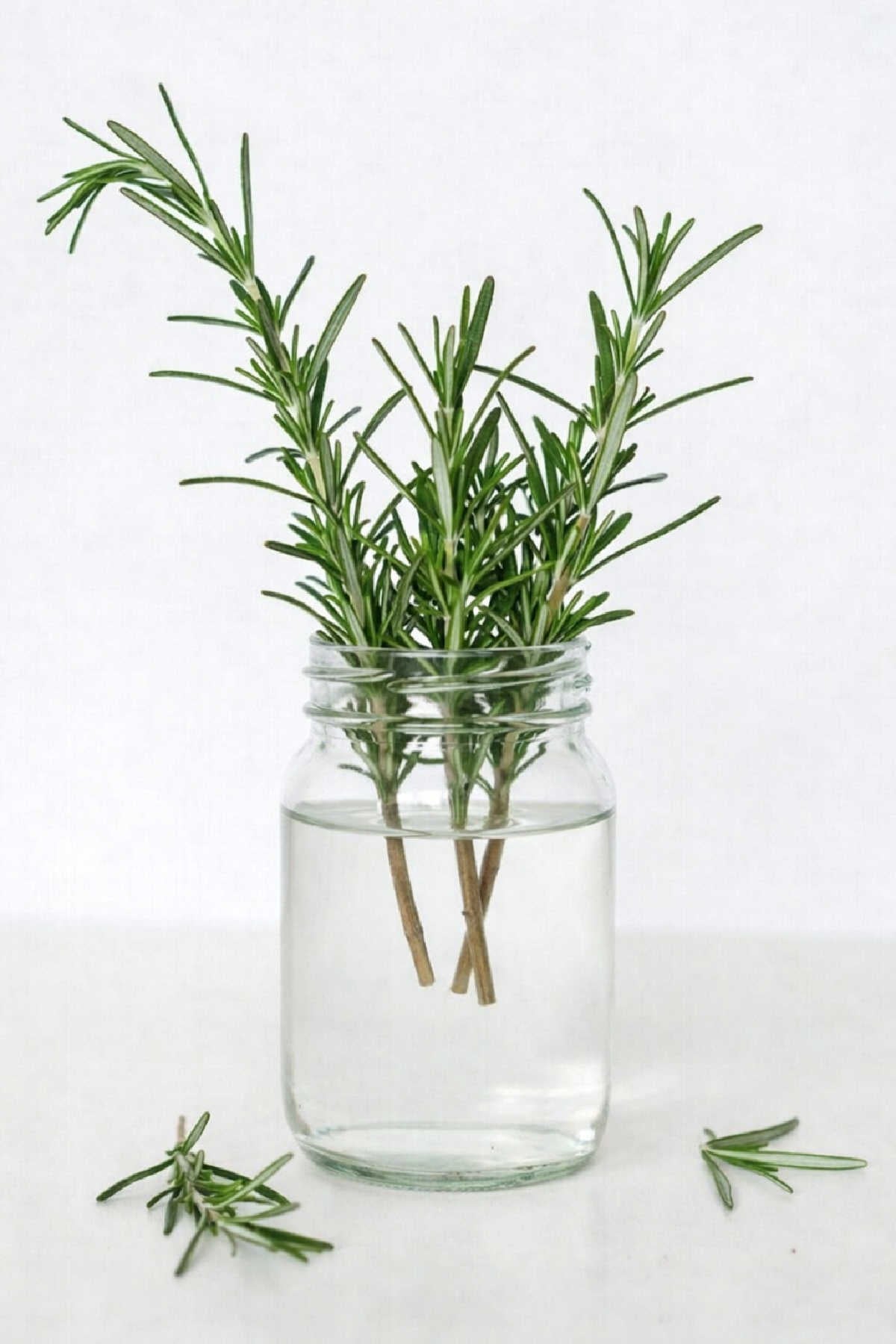
Rosemary clippings in a jar of water

You can quickly and cheaply grow new rosemary plants from cuttings and clippings in water. All you need do to grow rosemary from cuttings is:

  • Cut 4 or 5 stems of new growth from the rosemary bush of a friendly rosemary growing neighbour when they are pruning in early spring.
  • Take cuttings 15 - 20 cm / 6 to 8 inches long if you can.

  • But most importantly choose cuttings with light green - whitish new growth rather than grey - brown old woody stems.
  • Remove rosemary needles from the bottom of your cuttings.
  • Then simply pop your cuttings in a jar of water.

Put your jar of rosemary cuttings in a sunny spot indoors and within 1-2 weeks roots will appear. Give rosemary cuttings 3-4 weeks in water to establish healthy roots and then transfer cuttings to a pot using the tips below on How To Grow Rosemary In A Pot.

Growing Rosemary From Seed

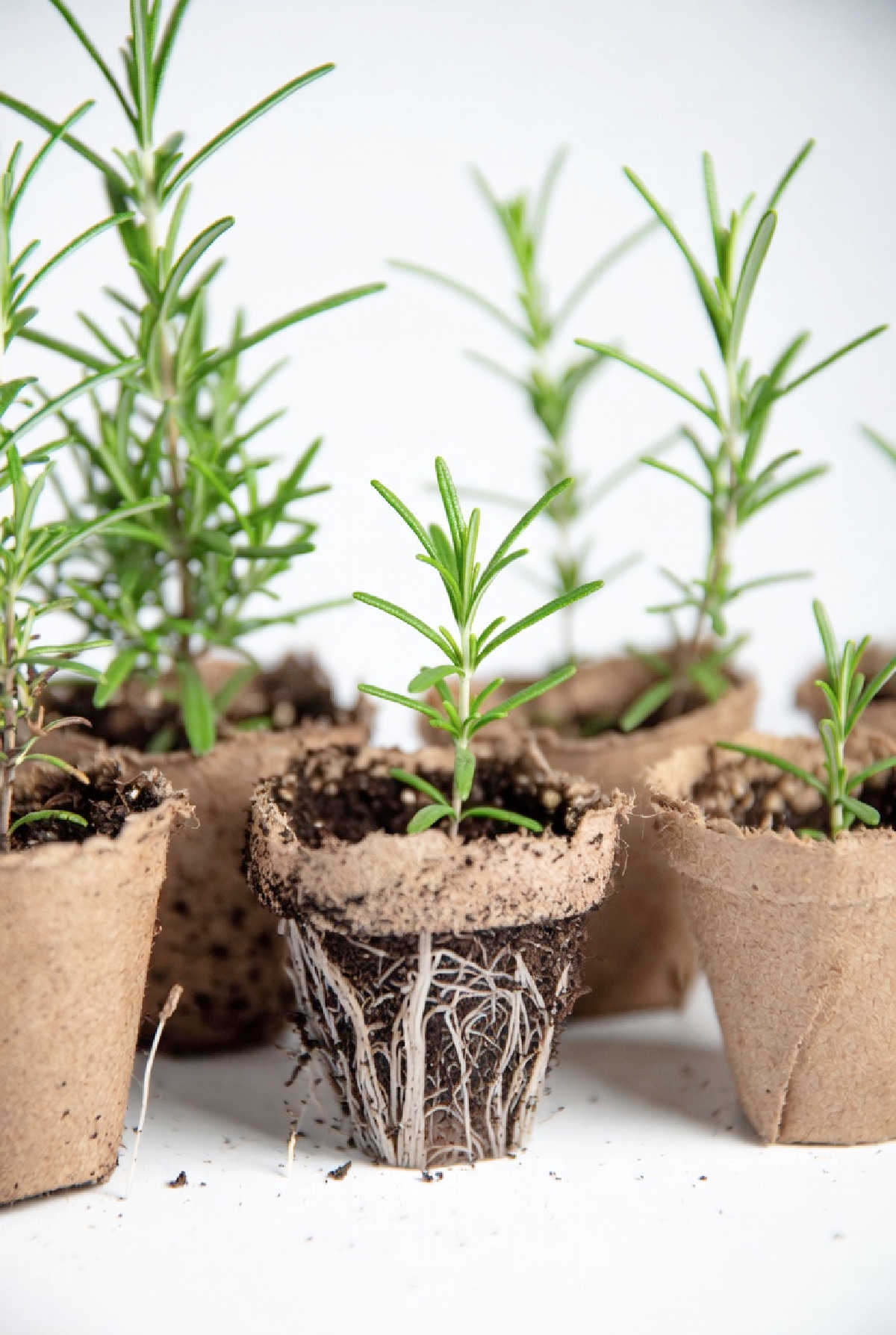
Rosemary seedlings growing in pots

If you can't get hold of rosemary cuttings and don't want to fork out to buy rosemary plants you can grow rosemary from seed. Key tips are :

  1. Sew seeds indoors 2 months before last frost as they can take up to 4 weeks to germinate.
  2. Sow more rosemary seeds than you will need as they aren't the most reliable germinators.
  3. Sow in well draining soil with a bit of sand and grit mixed in.
  4. Lightly cover seeds with soil.
  5. Water lightly as rosemary does not like damp conditions.
  6. Keep seeds in a warm spot.
  7. Cover rosemary seed pots with plastic to warm up further and encourage quicker germination.
  8. Once seedlings peep through they need plenty of light.

When seedlings are 7-10 cm / 3-4 inches transfer to bigger pots and grow on either indoors or outdoors.

Growing Rosemary In Pots

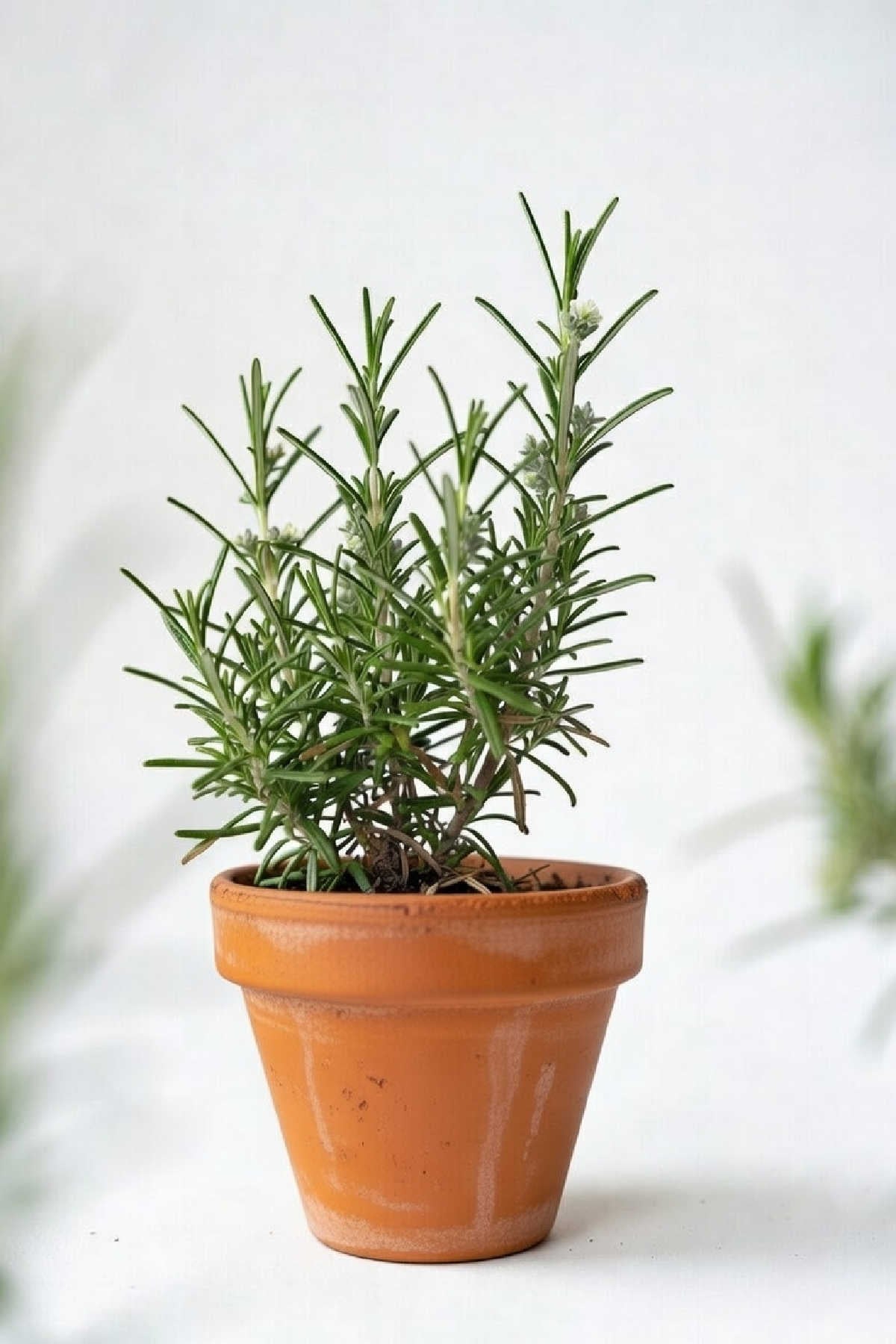
Rosemary plant growing in small terracotta pot

Rosemary grows well in pots both inside and outdoors, and from my experience there are big benefits from growing rosemary in pots :

  1. You can bring rosemary plants indoors if you have persistently sub-zero winters.
  2. Ensures rosemary is planted in the sandy, gritty soil it loves.
  3. Prevents over watering.
  4. Stops rosemary from taking over your herb garden!!

Any pot or container you use for growing rosemary - and other drought resistant herbs such as oregano or thyme - must have good drainage. You can help drainage by adding in grit, stones or bits of old broken pot at the bottom of the container and by raising your pot or container on some old bricks or something similar.

Rosemary is drought resistant and will grow in poor soil so even grown in pots it needs little watering and feeding but check the tips below on How To Water Rosemary and Rosemary Plant Care.

How Big A Pot For Rosemary?

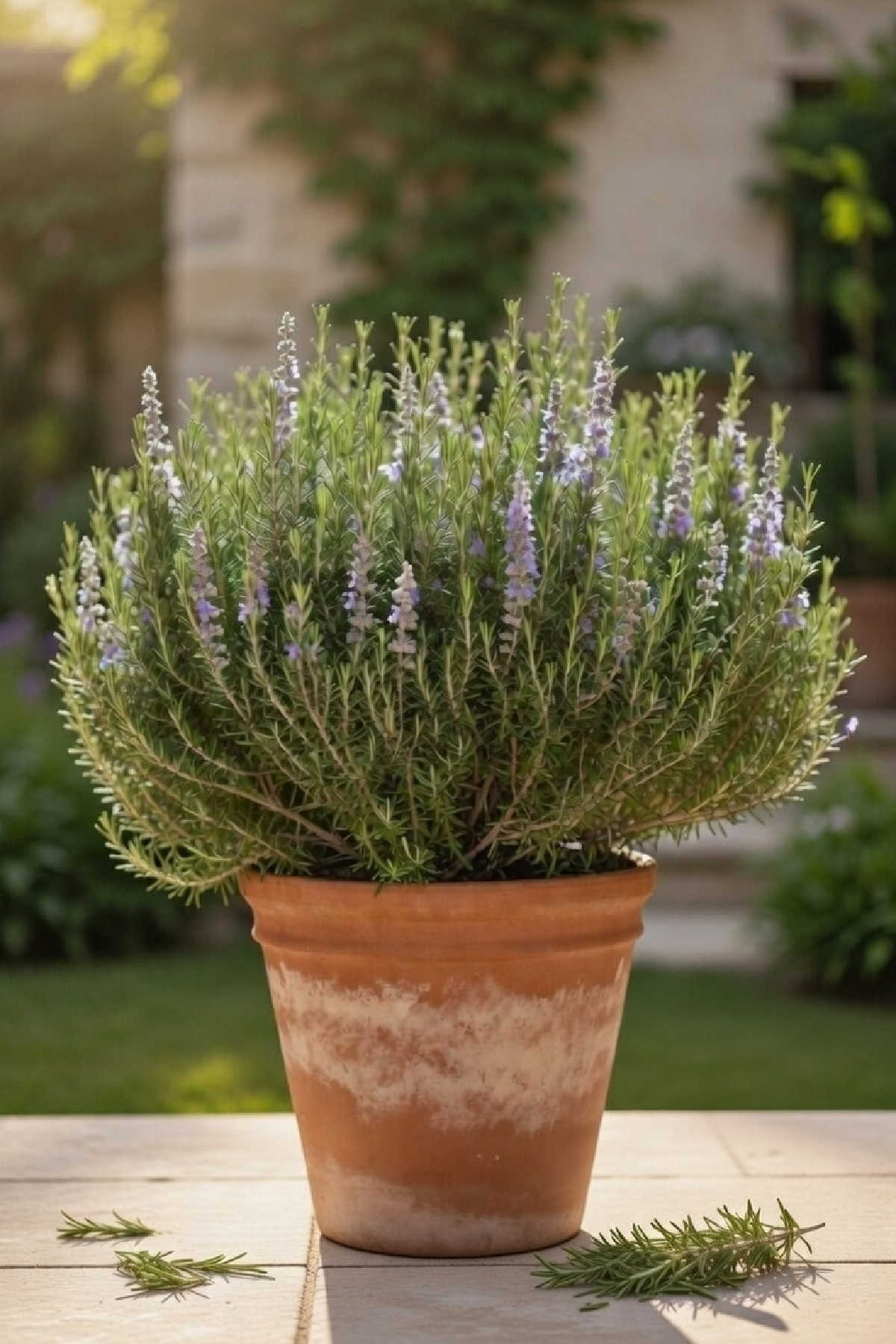
A large rosemary plant in a terracotta pot

Thriving rosemary plants grow 5 foot high and wide so won't be happy in a tiny pot. But a big reason for growing rosemary in pots is to control size.

A big 24 inch/60cm pot will let your rosemary flourish without taking over the garden. If you will need to bring your rosemary plant inside over winter - because you have persistent sub-zero temperatures - choose a smaller container but not anything less than 12 inch/30cm. Outdoor rosemary won't flourish in anything smaller.

Best Varieties For Smaller Pots

If you don't have space for a big pot, it's worth looking for the low growing rosemary varieties listed under Buying Rosemary Plants. You may not be able to find cuttings for these varieties, in which case buying a plant may be a better option in the long run.

Growing Rosemary Plants Inside

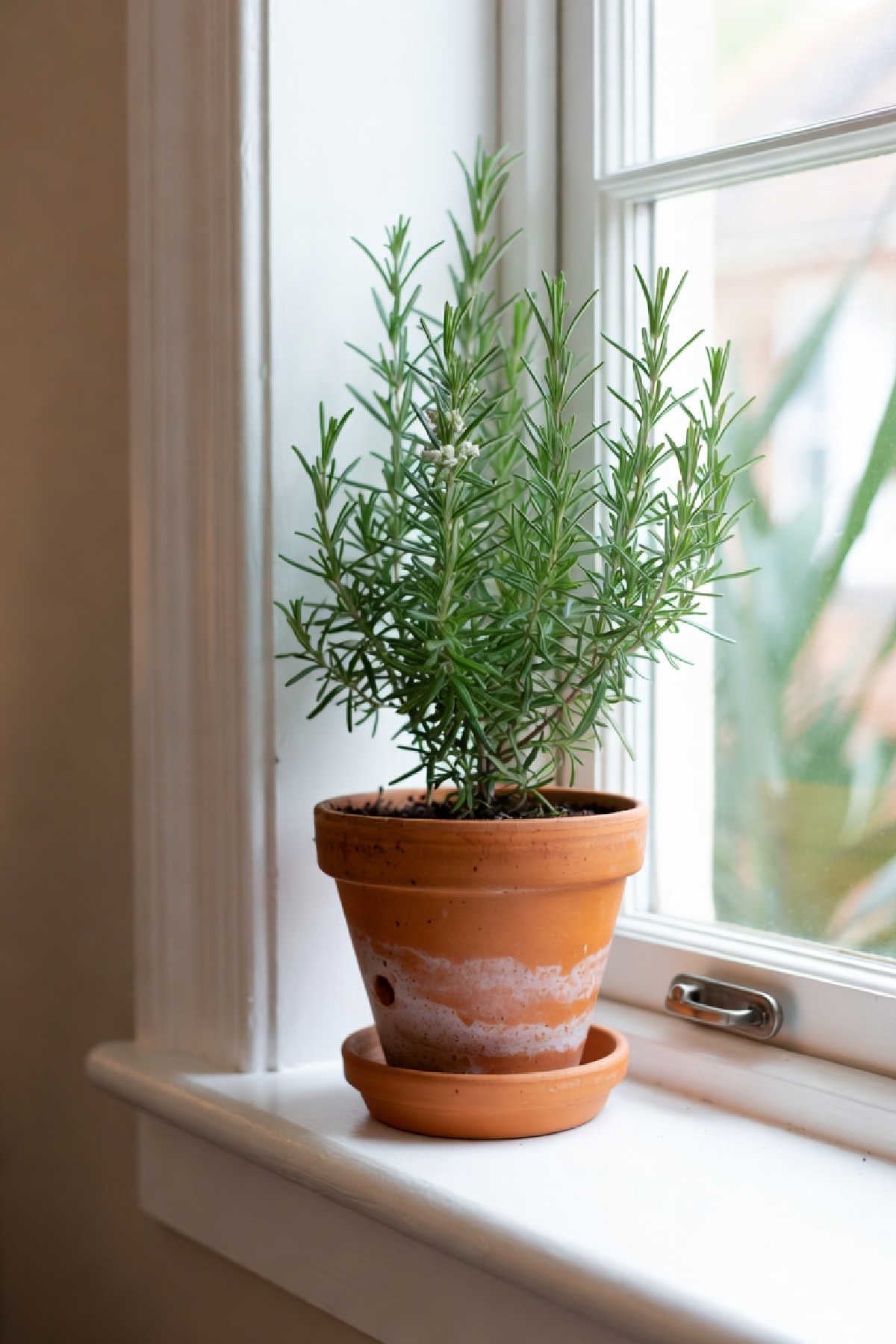
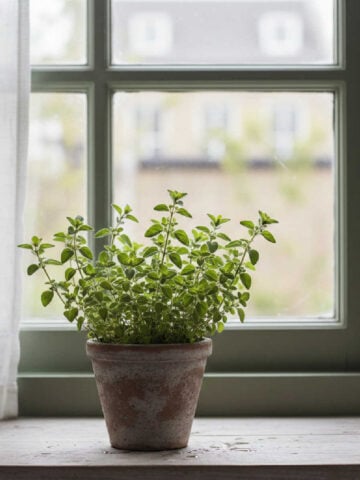
Rosemary plant growing in pot inside on a window sell

Rosemary is very easy to grow indoors in a little kitchen herb garden if you don't have any outdoor space.

If you suffer with harsh winters you will need to grow rosemary indoors over winter as rosemary doesn't tolerate temperatures below -4/25 degrees. An occasional blast as we in get in London is fine, a long hard winter is not.

The most important tips for growing rosemary indoors are:

  1. Make sure pot drains well so your rosemary plant doesn't get soggy.
  2. Only water lightly when soil is dry.
  3. Keep your rosemary plant in a warm, sunny spot.
  4. But try to give it some ventilation as constant humidity in the kitchen can cause mildew.

Rosemary is a more vigorous plant than thyme or oregano so if you grow rosemary indoors you can only really keep a plant going for a few years.

A good way to grow rosemary indoors is to grow new plants from cuttings in water every other year, so you constantly have small vigorous plants with nice young non-woody growth.

If you grow rosemary indoors in winter but grow it outdoors in summer you need to remember to acclimatise it gradually to both transitions :

  • In spring gradually expose rosemary to the cold
  • In autumn slowly reduce outside light your rosemary plant gets.

Growing Rosemary Outdoors

Large rosemary plant growing outdoors

Rosemary is a sunshine loving, drought tolerant herb but it is possible to grow rosemary outdoors successfully in a wide range of climates.

I have been growing rosemary outdoors in London for more than 10 years over many a cold, damp English summer. And I grow my rosemary in soggy London clay. My only problem is actually that my rosemary is too vigorous and given half the chance takes over the garden.

If you don't have a huge garden you can contain vigorous rosemary by growing it in a pot or dedicated bed. You can also buy low growing varieties as listed under Buying Rosemary Plants.

Transition rosemary plants started indoors slowly over a week or so to get them used to the outside temperature.

Best Spot To Grow Rosemary

Rosemary plant growing in sunny spot against a wall

Rosemary grows best in a sunny spot with plenty of light but some shelter so not blasted by cold winds.

Having said that, rosemary is remember vigorous. It can spread to over 1.5m / 5 ft high and wide so you need to plant your rosemary somewhere that can handle a big plant that won't over power everything else.

If you are growing rosemary in a small garden the right place structurally will not necessarily be the sunniest spot. In my experience, that's fine. My current rosemary plant only gets afternoon sun - not the minimum 6 or 7 hours often recommended - and does well.

Best Soil For Rosemary

Flowering rosemary plant growing outdoors

Rosemary - like thyme and oregano - does not need fancy rich soil and will grow happily in nutritionally poor ground including sandy soil.

Rosemary does however need the soil to drain well as it hates to have soggy roots. Rosemary can struggle in soggy, clay-heavy soil but grows in my south London combo of clay and grit. So if you are gardening on clay, adding grit or sand should help.

If you're transferring to a pot rosemary you've grown from cuttings, you may well find the cuttings do better in rough garden soil than potting compost.

Herbs To Plant With Rosemary

Small pot of rosemary growing amongst other pots of herbs

When starting a herb garden, it's easy to imagine we can shove all sorts of herbs in cheek by jowl but we can't.

Some herbs love water whilst others like rosemary can't stand getting soggy. And some herbs are bullies and will grab every last inch of the herb garden for themselves growing over and suffocating smaller and slower herbs.

Rosemary is wonderful but it is the herb garden's biggest bully!

So don't even think about putting rosemary in a pot or small bed with delicate little thyme or oregano without giving them plenty of personal space. Even lavender will suffer - I learned the hard way - from rosemary's bullying ways unless you keep it under sized.

If you're not growing rosemary outdoors in a pot, I would strongly recommend putting it in it's own bed with space to grow to 1.5 metres or you could use it as hedging to help repel cats from your garden.

How To Water Rosemary

Watering can next to pots of rosemary

Rosemary is pretty drought resistant and you're far more likely to harm it by over watering than under watering as it so hates getting soggy roots.

So typically the key rules for watering your rosemary plant are:

  1. Don't water outdoor rosemary plants that are NOT in pots
  2. Lightly water rosemary in pots indoors or outdoors when the surface soil is dry but don't let your rosemary dry out completely.

However, if its been windy, surface soil can be dry when the rest of the pot still has enough water, so it's worth giving the soil a good poke with a knitting needle or something similar and if it comes up moist leave it.

If you've grown rosemary from cuttings you will need to water a little more when your transfer the cuttings to a pot or bed and keep the soil lightly moist.

Rosemary Plant Care

Rosemary plant in flower

Rosemary doesn't need much plant care as it grows well in poor soil. Some gardeners say feed pot grown plants regularly but I don't reckon rosemary needs it. And if you want to garden organically or on a budget it's good to cut out unnecessary feeds.

I think the most important tips for rosemary plant care are :

  1. Keep on top of pruning.
  2. Control rosemary beetles.
  3. Support rosemary plants.

There are tips on all three below.

Pruning & Harvesting Rosemary

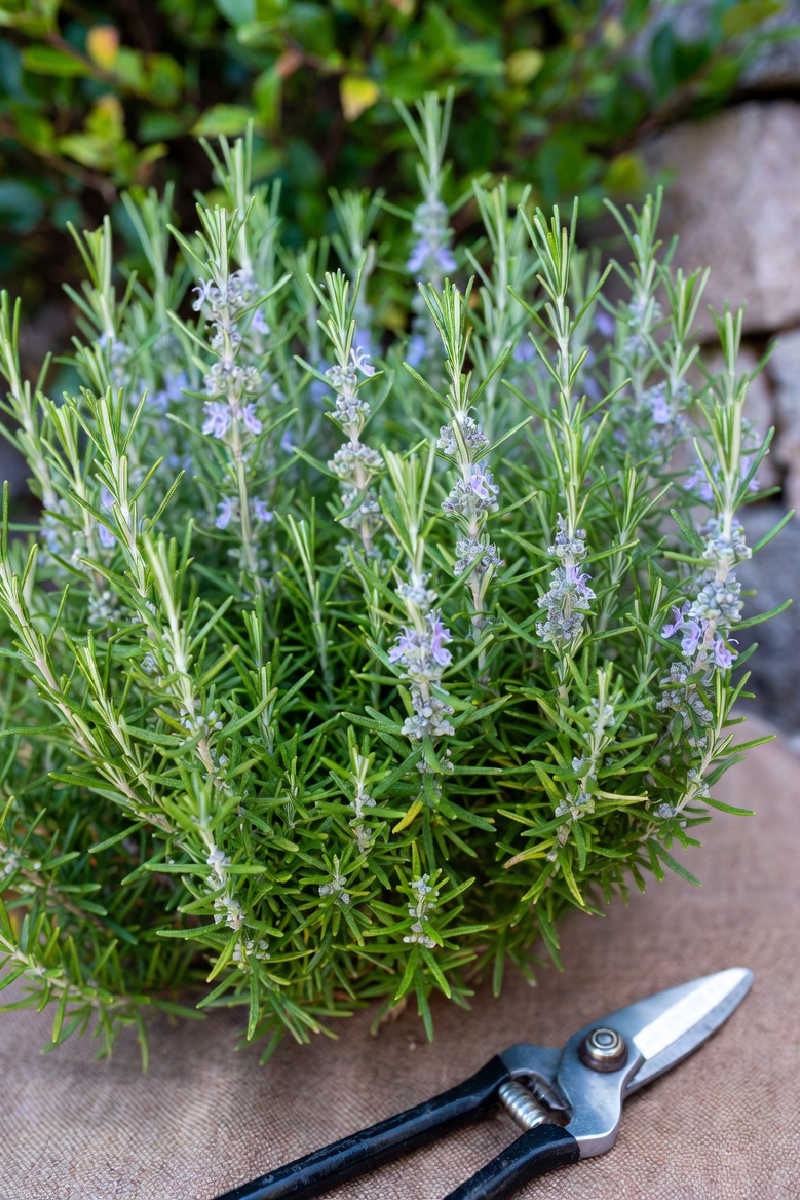
Rosemary plant with secateurs

When To Prune Rosemary

Prune rosemary in late winter or early spring to tidy up all the old growth from last year and keep the size of the plant under control. This will stop the lower parts of the plant from going woody and encourage them to stay productive.

New rosemary plants grown from cuttings will not need pruning until at least the second year after cutting.

How To Prune Rosemary

Typically you can prune a rosemary plant in early spring by a third as long as you are not cutting into any woody unproductive stems as they will not usually provide new growth.

Harvesting Rosemary

Harvesting rosemary once your rosemary plant is established, is straightforward. Just take what you need. Harvesting will help it flourish.

But when you're growing rosemary from cuttings wait until you have at least 8 to 10 inches of growth before harvesting and leave 6 inches of growth intact on each stem.

Common Rosemary Pests

The most common rosemary pest is the rosemary beetle. Rosemary beetles can do lots of damage fast so you need to keep them under control.

Rosemary Beetle Control

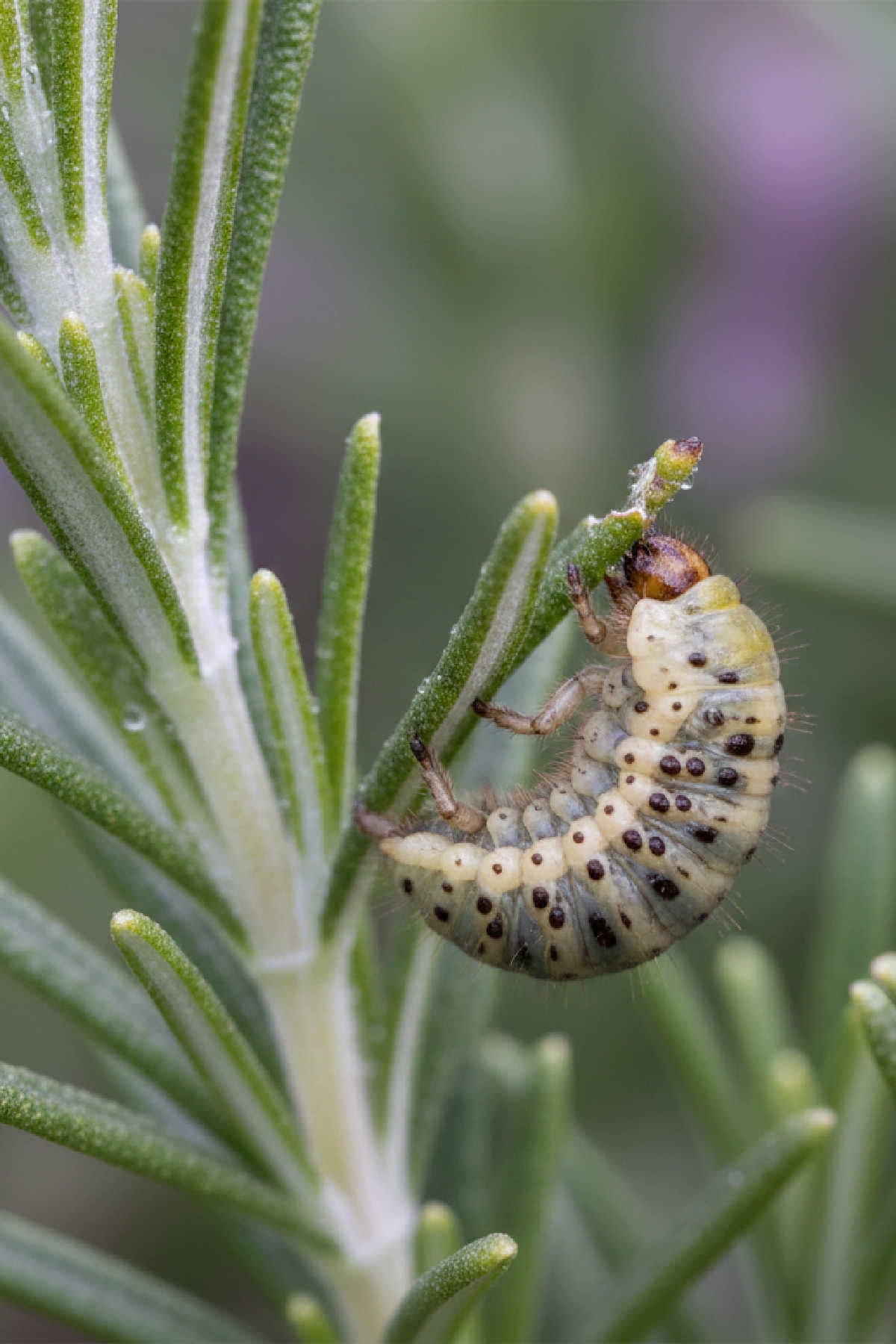
The first key step in rosemary beetle control is to recognise both the adult and the larvae which do most damage.

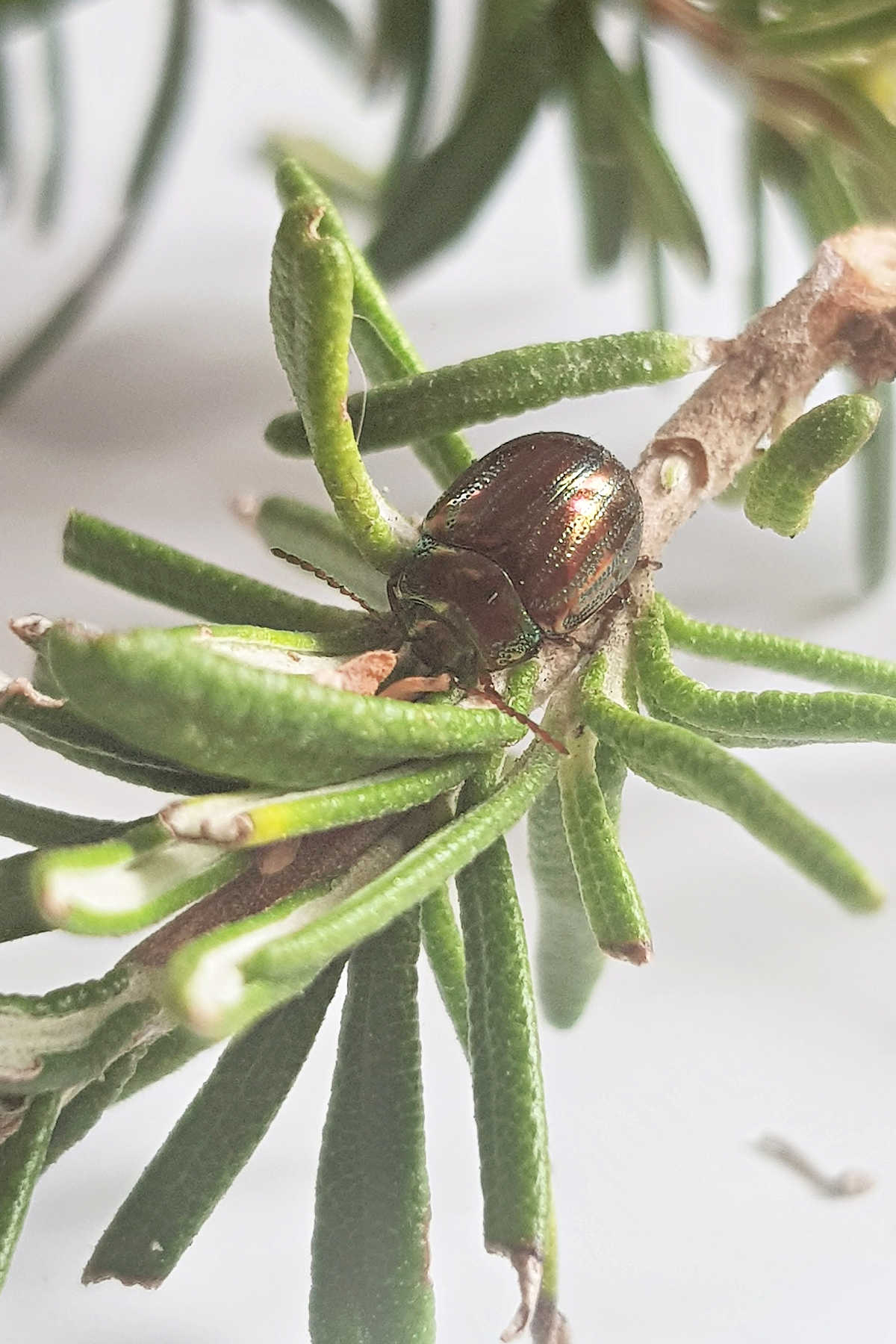
Adult Rosemary Beetle

Adult rosemary beetles are small rather handsome black beetles with iridescent stripes. They are about the size of a ladybird (ladybug to Americans)

Adult rosemary beetle on rosemary cutting

Rosemary Beetle Larvae

Rosemary beetle larvae do not look like the adult beetle. They are the same light grey-green colour as the new young tips on the rosemary plant so can be very well camouflaged.

The larvae appear as soon as it starts warming up in late winter and early spring. As the rosemary puts out new growth, the rosemary beetles devour it. So you must get rid of them early.

Getting Rid Of Rosemary Beetles Organically

Take time after pruning in late winter - spring to look closely for larvae hatched over winter. Remove manually and squidge. Get rid of as many larvae as possible to break the cycle.

Then look out for adult beetles when ever harvesting your rosemary. Shiny adults are easy to spot especially in late summer and early autumn when mating. This is another key time to break the cycle.

I find nimble fingered kids are brilliant at spotting and removing them and can have your problem sorted for half an hour or so's worth of pocket money!

Rosemary Plant Diseases

Rosemary plants are pretty resilient and the only two common diseases they struggle with are a result of dampness and moisture, these being:

  1. Powdery Mildew
  2. Root Rot

Powdery Mildew

Powdery Mildew On Rosemary

Rosemary plants grown indoors - whether from seeds or cuttings - are most vulnerable to powdery mildew. Your plant will look like it is covered in fine white dust and if it is not treated needles and stems may die and drop.

To control and prevent powdery mildew follow these simple tips :

  1. Remove infected stems, don't put in your compost.
  2. Give plant space to breath, prune back if outgrown space.
  3. Keep ventilated if growing indoors.
  4. Spray with solution of 1tsp of baking soda to 1 litre of water.
  5. Spray with cooled chamomile tea.
  6. Don't over water.
  7. Water soil not plant.

Root Rot

Rosemary plant with root rot.

Rosemary can suffer from root rot because the plant just gets too wet either from over watering in summer or too much rain in a wet climate.

Typical signs of root rot are :

  • Drooping stems.
  • Brown, yellow or black needles.
  • Brittle needles.
  • Dying needles and stems.
  • Failure to put out new growth.

If your rosemary does show signs of root rot don't despair, there are simple things you can do to revive your plants :

  1. Stop watering.
  2. Clear away any moisture holding mulch or leaves from around plant.
  3. Prune away damaged stems.
  4. If in pot, remove from pot, loosen soil and cut away any roots that look black or slimey.
  5. Add stones, broken pot shards or grit to bottom of pot.
  6. Repot with grit and sand mixed into the potting soil.
  7. Only water potted plants when bottom of soil is drying out.

Health Benefits Of Rosemary

A small bundle of rosemary clippings tied with string

Rosemary has wide ranging health benefits and was traditionally used as:

  1. Natural antibiotic
  2. Natural antihistamine
  3. Headache relief
  4. Quick sunburn remedy
  5. General pick me up
  6. Memory booster
  7. Gas, bloating, heartburn & indigestion treatment
  8. Stress relief remedy
  9. Rinse and scalp treatment for dandruff and flakey scalps.

For most of these remedies you just add a few rosemary cuttings to a few cups of boiled water and leave to seep for 5 to 15 minutes.

Benefits Of Rosemary In Garden

Rosemary plant in flower in a garden

Rosemary has lots of benefits to offer in the garden including :

  1. Drought resistance.
  2. Evergreen for year round structure.
  3. Attracts small birds.
  4. Provides late winter, early spring food for pollinating bees & butterflies
  5. It's a natural mosquito repellent
  6. Can be used in a cat repellent border if you're being plagued by neighbourhood cats using your back garden as a bathroom!!

Buying Rosemary Plants

Rosemary plant of Tuscan Blue variety

If you haven't the patience to grow rosemary from cuttings or seeds you can of course buy rosemary plants. The big benefit of buying rosemary plants is that you can pick specific varieties that most meet your kitchen and garden needs . Key varieties to look out for include :

  • Rosmarinus Officinalis
  • Arp
  • Tuscan Blue
  • Spice Islands
  • Gorizia
  • Prostratus
  • Blue Boy

Rosmarinus Officinalis

  • Classic upright form, vigorous growth to ~1–1.2m tall
  • Dense green foliage with strong traditional aroma and light blue flowers
  • Widely available staple for cooking and general garden use

Arp

  • One of the most cold-hardy varieties (survives down to around -10°C to -15°C once established)
  • Upright growth to ~1 - 1.5m with thin, silvery needle-like leaves
  • Ideal for colder climates or marginal zones

Tuscan Blue

  • Tall, strongly upright form (up to 1.8–2m+) with thick stems - excellent for hedges or topiary
  • Very aromatic leaves with lemony-pine notes; dark/vivid blue flowers
  • Favourite for culinary use and bold landscape structure

Spice Islands

  • Upright to ~1–1.5m with silver-green foliage and dark blue flowers
  • Exceptionally aromatic & spicy flavour (hints of clove/nutmeg) - top choice for cooking
  • Intense scent makes it stand out for both kitchen and ornamental appeal

Gorizia

  • Upright, open growth to ~1.2-1.5m with notably larger/thicker leaves than standard types
  • Bold, rich flavour and pale blue flowers
  • Great architectural specimen or accent plant with enhanced visual and taste impact

Prostratus

  • Prostrate creeping variety
  • Low, trailing or cascading habit (10-60cm tall, spreading 1-3m+)
  • Perfect for ground cover, walls, containers, or hanging baskets
  • Evergreen coverage with blue flowers; some bloom longer
  • Huntington Carpet or Santa Barbara are good alternatives.

Blue Boy

  • Compact, slow-growing dwarf form (often under 60cm) with tiny leaves
  • Suited to small pots, borders, or rock gardens
  • Delicate appearance but still edible (though smaller harvest)

And there you go, everything you need to know about growing rosemary successfully. For more tips check out my other Herb Garden posts and follow me on Pinterest.

How To Grow Oregano Easily

March 12, 2021 by Alice 1 Comment

A pot of oregano growing indoors on a window sill
Oregano plant in flower
[Read more...]

Growing Marigolds To Control Pests Organically

March 10, 2021 by Alice 1 Comment

French Marigolds
French Marigolds
[Read more...]

How To Grow Parsley Quickly

February 15, 2021 by Alice 8 Comments

Cut parsley stems on a marble chopping board
Parsley cuttings growing in a jar of water
[Read more...]

Growing Turnips & Turnip Greens

February 5, 2021 by Alice 2 Comments

Growing Turnip Greens Growing Turnip Greens [Read more...]

How To Help Kids Who Worry A Lot

January 27, 2021 by Alice 4 Comments

How To Help Kids Who Worry A lot

Kids are meant to worry.

We all are because worrying is part of being human and it keeps us alert to new and changing dangers and can motivate creativity, hard work and bravery. But these days the benefits of a healthy level of anxiety have been overwhelmed for many kids by constant and destructive worrying.

And that has left many of us as parents struggling to know how to help kids who worry a lot and who are being hurt by it.

As a parent, it's very tempting to personalise our kids behaviour and see self-destructive worrying as their problem that we need to help them solve but this ignores the many ways in which our lifestyles today transform our natural instinct to worry into a monster within that our kids cannot control.

We live right now in an always-on, ever-busy, over anxious world in which we are all constantly bombarded with "news" and the pressure to keep up. Surviving this onslaught has unleashed - if we're honest - our owner inner demons.

So if we're trying to help kids who worry "too much" we do need to look very hard at the way we are living our lives as a family and as a community and ask ourselves whether it is actually us who is feeding their monster. And whether it is actually our problem and not theirs.

But if we do have a child who is really struggling and suffering with worry, what then can we do practically as parent to help?

How Can We Help Kids Who Worry?

Some children who worry a lot unquestionably need specialist support to help them and I'm not a specialist in any way - I am just a mother learning to ease tendencies to worry destructively in my own family - but I have found there are simple changes we can make in our lives that in the short term help tame the worry monster and in the long term starve it of food.

So in this post I have tried to bring together all the small simple every day ways I have discovered to help kids ease their worries. These little changes aren't a silver bullet that "solves" worrying.

Some of us have some pretty hard wired tendencies to worry more about stuff that others will take easily in their stride. And most of us as kids and adults will naturally go through seasons of life - such as puberty, pregnancy, perimenopause and old age - in which we worry more.

And it is near impossible to step away completely from the anxiety inducing overload of the digital world and the catastrophising it encourages.

But little changes to our every day life can powerfully reset the balance between healthy anxiety and more destructive worrying that sucks the joy out of living.

I do hope these simple tips give you some ideas of how you can support kids who are worrying a lot and also help you as a parent ease any tendencies of your own to worry destructively. I would really value your feedback.

If you find these ideas helpful please do share with others and for more support do have a read of my other slow parenting posts.

How To Help Kids Who Worry A lot

Simple Ways To Help Kids Who Worry A Lot

None of these simple tips - as I said - are silver bullet solutions for worrying but find a good handful or so that really resonate with you and invest your energy into turning them into habits for the whole family.

Over time those habits become easy paths to more positive and hopeful emotions that provide balance for our worries ...

Cover The Bases

  1. Spend lots more time outdoors and explore.
  2. Get up early and get daylight (this is transformative for all of us young and old!!)
  3. Get enough sleep.
  4. Cut down sugar as much as you can as it triggers stress hormones and physical inflammation which can itself lead to anxiety.
  5. Ensure kids enjoy at least an hour of totally free play daily.
  6. Practise a little something for pure pleasure every day.
  7. Give kids some undivided attention everyday e.g. play games with your phone off.
  8. Slash screen time. Screen exposure triggers the stress hormone cortisol. Constantly raised cortisol levels prime kids bodies to worry.
  9. Stick to clear boundaries.

Slowly Increase Independence

  1. Build children's independence week by week, month by month.
  2. Give them freedom to play out of sight of any adults.
  3. Give responsibility for animals.
  4. Give responsibility for younger children.
  5. Grow something simple. Helping things grow is a powerful antidote for pessimism.
  6. Give them responsibility for themselves e.g. walking to school alone.
  7. Give them more and more age challenging responsibilities ...
  8. ... and help them succeed.

Model Creative Resilience

  1. Swallow little tadpoles together ...
  2. ... so you only occasionally have to swallow the frogs.
  3. Enjoy "winging it" ... sometimes.
  4. Have fun "making do".
  5. Get outside and work on something hard together.
  6. Read stories where tough challenges are resolved.
  7. Model acceptance of luck and chance and things we can't change.
  8. Avoid catastrophising about your life ...
  9. ... and about the world. This is a tricky one right now because of the pandemic and climate change but it is not healthy for children.

Nurture Bodies

  1. Stimulate the vagus nerve ...
    • Hum tunes
    • Whistle whilst you work
    • Sing songs together
  2. Enjoy balancing activities every single day: bikes, scooters, balancing on the curb, balancing on a log, walking on a wall. These are essential to children's neurological development. Missing out on them can actually leave kids feeling unbalanced.
  3. Enjoy crossing the mid line activities : climbing, skipping, hopscotch, Twister. Ditto.
  4. Encourage simple repetitive but creative fine motor activities - lego, jigsaws, finger knitting, sewing, fine painting. These are self-soothing habits for life.
  5. Cuddle lots.
  6. Eat plenty of complex B vitamins in whole grain food, nuts, seeds and good meat.
  7. Have frequent contact with animals.

Foster Forgiveness

  1. Say sorry.
  2. Ask for forgiveness genuinely so they never doubt it is possible.

Self Awareness

  1. Help them understand their tendencies e.g. introversion, extraversion ...
  2. ... and adopt simple strategies to support and compensate.
  3. But don't always personalise problems ... some challenging behaviour is a natural stage of child development.
  4. Be open about your emotions and how you're handling them ...
  5. ... but don't over share.
  6. Recognise patterns in worrying e.g. start of new school year and make time for more support in these periods.

Simplify & Slow Down

  1. Declutter your home.
  2. Declutter your schedule.
  3. Simplify transitions.
  4. Slow down transitions.
  5. Keep a day of rest for everyone.
  6. Leave some slack in every day.
  7. Have unplanned days.
  8. Go on a low information diet as a family and break your collective addiction to "news".
  9. Give the whole family more time to slow down and actually enjoy living right here, right now ....

These apparently tiny changes in our lives truly can help us resist the intense pressure of an over busy world and help tame the inner demons we all have that feed on our worries and leave us fearful of life itself.

I do help these simples help you support kids who are worrying a lot. For more simple ideas do have a read of my other slow parenting posts

Or if you are a Pinterest fan do follow my Positive Parenting - Happy Kids board.

How To Make Saving Money Fun

January 25, 2021 by Alice Leave a Comment

Fun Ways To Save Money Fun Ways To Save Money [Read more...]

First Trimester Pregnancy Tips

December 18, 2020 by Alice Leave a Comment

First Trimester Pregnancy Tips [Read more...]

How To Be Productive Every Day

December 17, 2020 by Alice 2 Comments

Smiling woman working at desk

Most of us long to be more productive every day whether at home or work or school and are always on the look out for an all-singing, all-dancing time management technique or productivity app that will help us get stuff done fast.

The truth is these fancy theories and pricey products rarely work. We still end up running around exhausted on the proverbial hamster wheel as we juggle dozens of different demands and get little done in the chaos.

But there are a bunch of very simple time management hacks that truly can transform our productivity and I have 25 of the very best of them here.

I do hope these productivity hacks help, let me know what works best for you.

Best Time Management Hacks

Time Blocks

There have been whole books written on time blocking but simply focusing our energy on one area of work for a set period of time against the clock - without multi-tasking - helps us get stuff done. We all know it is true - we just need to remember to do it.

Balance

We obviously need to block out time for different areas of work but we also need to block out time for home life including rest. Deep diving into one project at the expense of the rest of our life isn't a sustainable way to be productive. We need balance.

Micro Habits

We can very often achieve more by consistently repeating tiny activities daily than by chasing the latest bandwagon project.

Rhythm

We can rarely stick to tight schedules in the real world but regular daily, weekly and monthly time blocks get us into a rhythm and it is through that rhythm we make real progress.

Looping

Looping is to rhythms what planning is to projects but much more efficient. A simple meal loop helps us cycle through meals we love easily with no need to handover our free to time to meal planning.

Practise

Repeated micro habits and regular rhythms let us practise skills. Every day practice helps us be more productive every day ...

In The Zone

... and together balance and habits and rhythm and practice can take us "into the zone" where our productivity sky rockets.

The Right Habits

We just need to be careful to stick to the right habits (sending endless emails is not one) ...

Slack

... and leave slack in every day and every week and every month both to take the hit of the unexpected and to give us time to reflect.

Keep An Eye On Our Shadow

We all do strange things for strange reasons under stress and we can work very hard wasting our time. We need to use slack to stand back and ask - honestly - why am I doing this?

Energise Ourselves

... and build time into our time blocks to energise ourselves. That could be exercise. It could be a chatting with a friend. Or hiding away from the world with a book. Whatever works for us.

Swallow Frogs

Facing up to that thing we're putting off is a well known tip for being more productive. Avoiding stuff drains our energy and time.

Swallow Tadpoles

But it's even more productive to gulp those problems down as tadpoles before they've grown in frogs. To get into the habit of facing up to our fears & we need to practise it in the rhythm of our days.

A Stitch In Time

Because it is true, a stitch in time does save nine.

Ditch ... Don't Delegate

However sometimes we do need to stand back, recognise the problems are unimportant and ditch them. And if they are unimportant we don't want to waste someone else's time delegating!

Don't Dive Too deep ... At First

Deep skills and deep knowledge are intensely valuable but it's too easy to waste months of our time on the unimportant if we dive in too deep at first ...

Come Up For Air

... or if we never come up for air to ask why am I doing this? Is it really important? Could I let it go? Or do it differently?

Clear Clutter

It's impossible to see the wood for the trees in our work and home life when we're drowning in clutter, so gently practise decluttering daily and watch your productivity soar.

Reuse

Our obsession with everything new steals too much precious time for reinventing the wheel rather than reusing what we have.

Patterns & Templates

Reusable patterns and templates can sky rocket productivity but we need to be patient and practice hard first. Doing the wrong thing quicker doesn't help us, it's still the wrong thing.

Walk Away

Sticking to something and patiently realising the productivity that comes from practise and sinking too much time into the wrong thing is a balancing act. Sometimes we need to walk away.

Walk On It

... but sometimes we just need to step away and go for a walk and mull it over as we stroll along or stride out and come back with fresh eyes.

Accept Good Enough

... and sometimes that means accepting that something is good enough and that if we're going to keep that balance in our lives that helps us be more productive in the long term we need to do the best we can in the time we've got ...

Rest

... and then we need to rest because real rest - not just sleep - as part of our daily habits and weekly rhythms is the final big secret to being more productive every day and to reclaiming our lives.

And there you go, 25 simple productivity hacks that help us break the tyranny of the to do list and actually make progress in the things that matter most to us.

Best Girl Detective Books

September 20, 2020 by Alice 1 Comment

20 of the very best girl detectivies in kids literatures including a whole bunch of new series #kidsbooks #crimefiction #booklover

20 of the very best girl detectivies in kids literature including a whole bunch of new series #kidsbooks #crimefiction #bookloverThis post includes affliate links, read here how these work.

[Read more...]
  • « Previous Page
  • 1
  • …
  • 16
  • 17
  • 18
  • 19
  • 20
  • …
  • 48
  • Next Page »
Sloely

Welcome!

I am a London mother sharing the surprisingly simple remedies that truly can transform the health and happiness of family life ...

More about me

Slow Living

Simple ways to enjoy life slowed down ...

  • Slow Living Tips
  • Woman calmly relaxing by the sea
    Simple Spiritual Self Care Tips
  • Young woman with long hair standing calmly looking at the sunset.
    Simple Self Care Routine
  • Smiling woman working at desk
    How To Be Productive Every Day

Slow Train Travel

Letting the train take the strain ....

  • French train in station
    European Train Travel Tips
  • Waterside windmill in Holland
    Weekend Breaks In Holland By Eurostar
  • Monet's house in Giverny France
    Weekend Breaks In France By Train
  • Night Train
    European Sleeper Trains

Christmas Planning

Lovely simple Christmas ideas ...

  • Homemade Christmas Ornaments
    Homemade Christmas Ornaments
  • Collage of small Christmas tree ideas
    Christmas Tree Ideas For Small Spaces
  • Simple DIY Christmas Wreaths
    Simple DIY Christmas Wreath Ideas
  • Quick Easy Christmas Table Decor
    Quick & Easy Christmas Table Decoration

Footer

↑ back to top

About

  • Privacy Policy
  • Disclaimer
  • Terms & Conditions

Contact

  • Contact

As an Amazon Associate I earn from qualifying purchases.

Copyright © 2025 Sloely